The Meridian's charter prefers objects that can prove themselves — a dated inscription over a bare signature, a documented chain of custody over a dealer's confident shrug. This narrative gathers the objects that arrived already carrying their own evidence: the names, dates, and places left behind by the people who owned them first. Seven strangers, none of them famous, each of whom reached out of their own vanished afternoon and wrote themselves into the record.
On 12 February 1906, a woman named Cecile Mary Davies opened a brand-new pocket Byron from Blackie's Red Letter Library and inked her name onto its flyleaf. We know the exact day. At Christmas 1918 — barely six weeks after the guns of the Western Front fell silent — somebody gave a boy a copy of The Great White Chief, an adventure novel from the confident old empire, and marked the occasion in the endpaper. In July 1927, Ensham L.C.C. School on Franciscan Road, Balham, presented Nature's Arts and Crafts to one Osmond Hollington as a prize for English, and pasted in the London County Council label that records the school, the subject, and the date in tidy officialese.
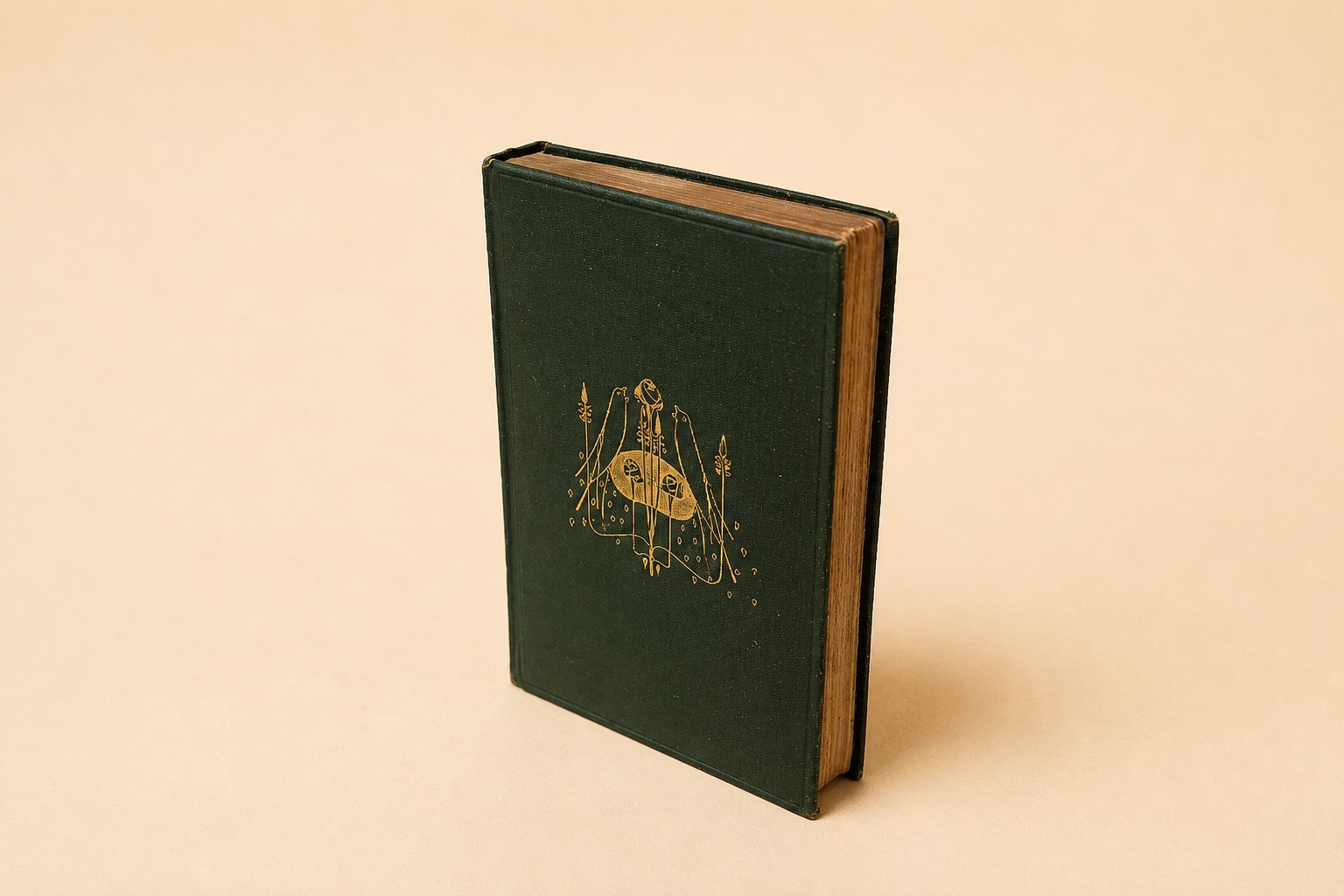
Byron in Art Nouveau gilt, introduced by the critic who brought Symbolism to England, signed in pencil by Cecile Mary Davies two days before Valentine's Day, 1906. Price: one shilling and sixpence.
View object →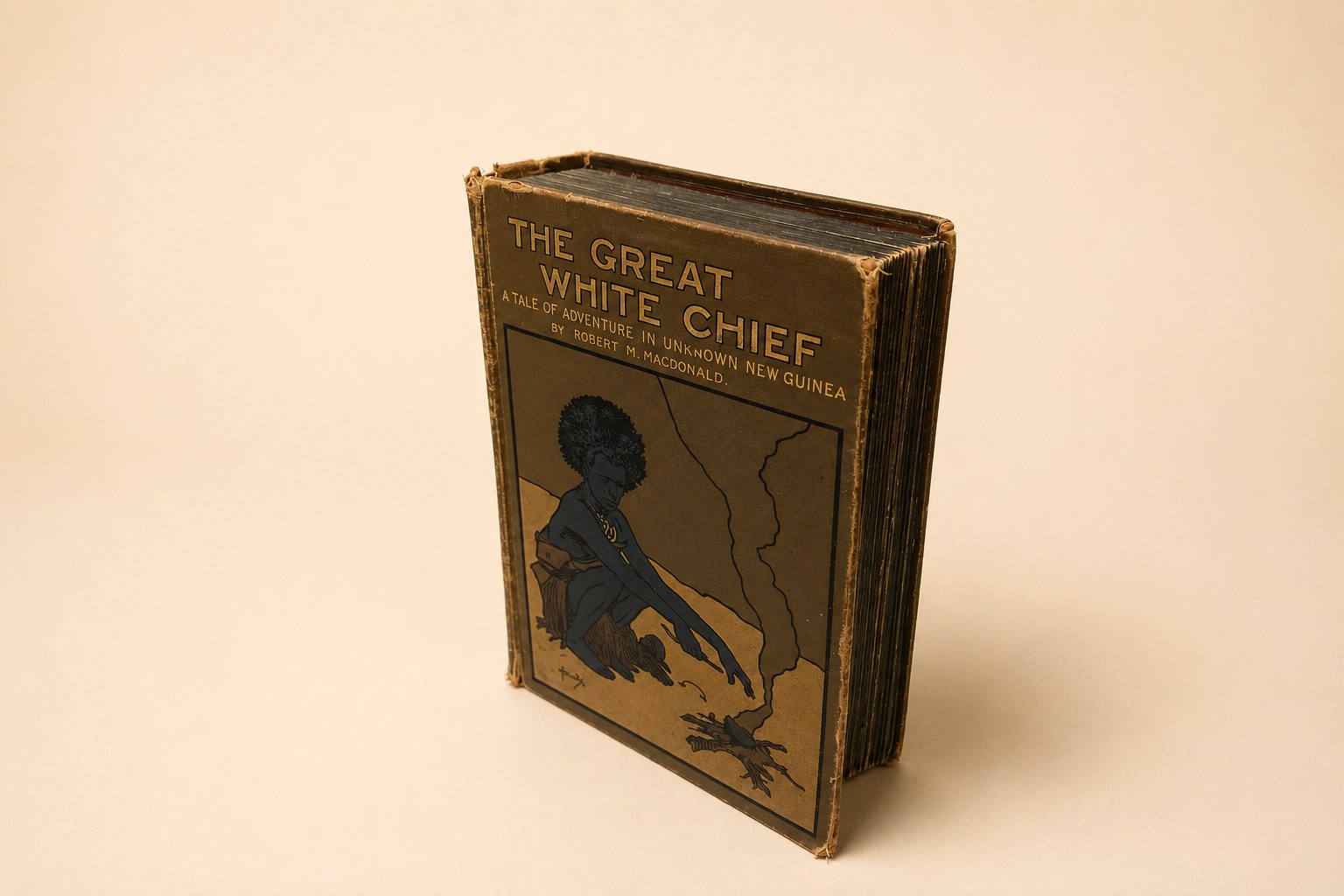
'The characters are real, and the incidents not imaginary': an Edwardian New Guinea adventure that reads like a prospector's disguised memoir, with eight Rainey plates, a folding map, and a Christmas 1918 inscription.
View object →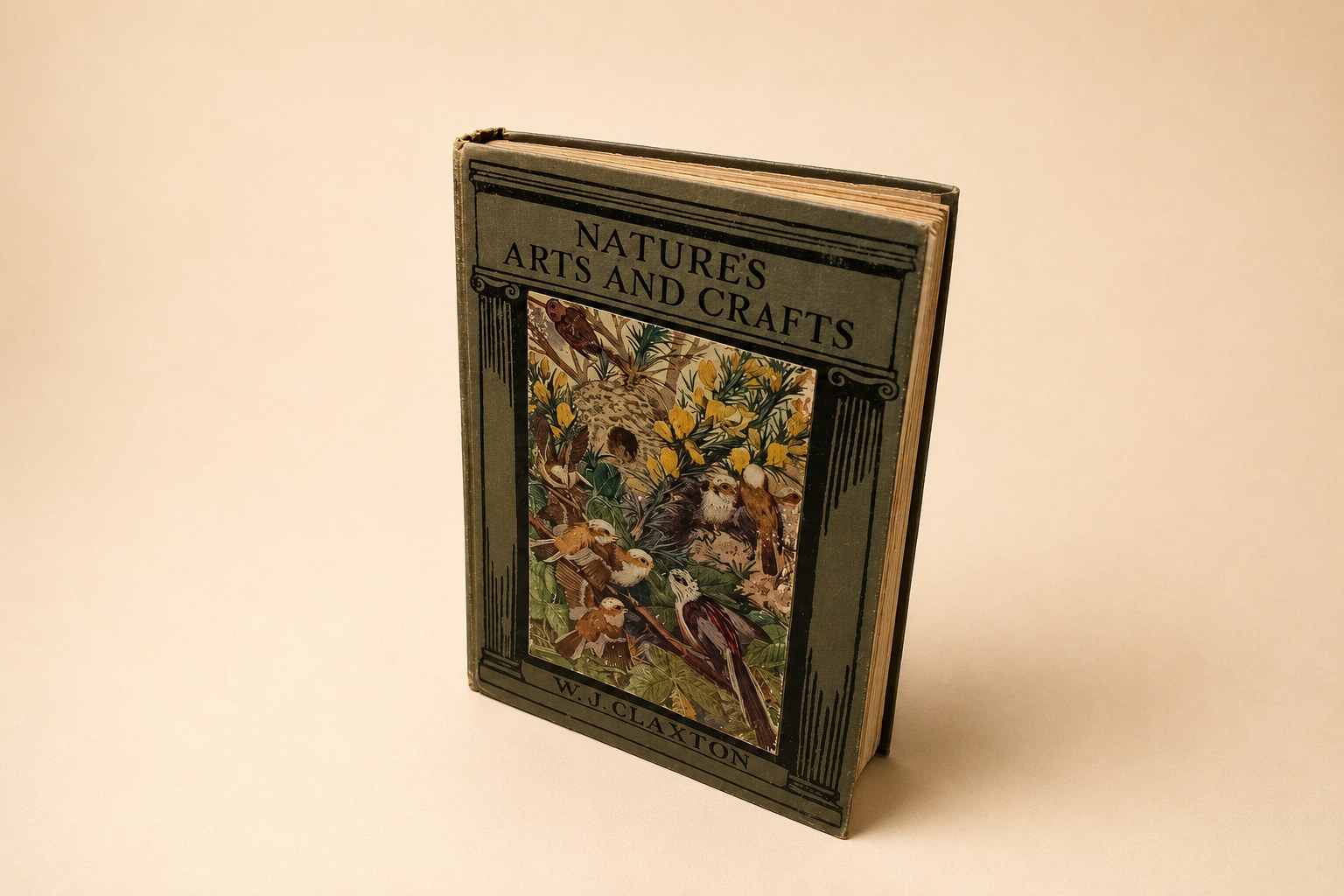
Spiders as architects, squirrels as bankers, bower birds as upholsterers: an Edwardian nature book for children, awarded as an LCC school prize to Osmond Hollington of Tooting for English, July 1937.
View object →That same December, another hand wrote Xmas 1927 inside a new copy of The Flight of the Heron. A reader who signed only as L. Venables pencilled their name onto the half-title of Lady Agnes and Other Poems, a book almost nobody else has ever read. In Belfast, the firm of D. A. McLean, Bookseller, stamped a wartime War and Peace before sending it out into a city the bombers had already found. And on 22 November 1947, Saltash United F.C. — a small Cornish football club then in only its second year of life — presented A. R. Wellington with a barometer carrying a brass dedication plaque, the kind of public, screwed-down honour a modest club bestows when it wants to say thank you in a way that will last.
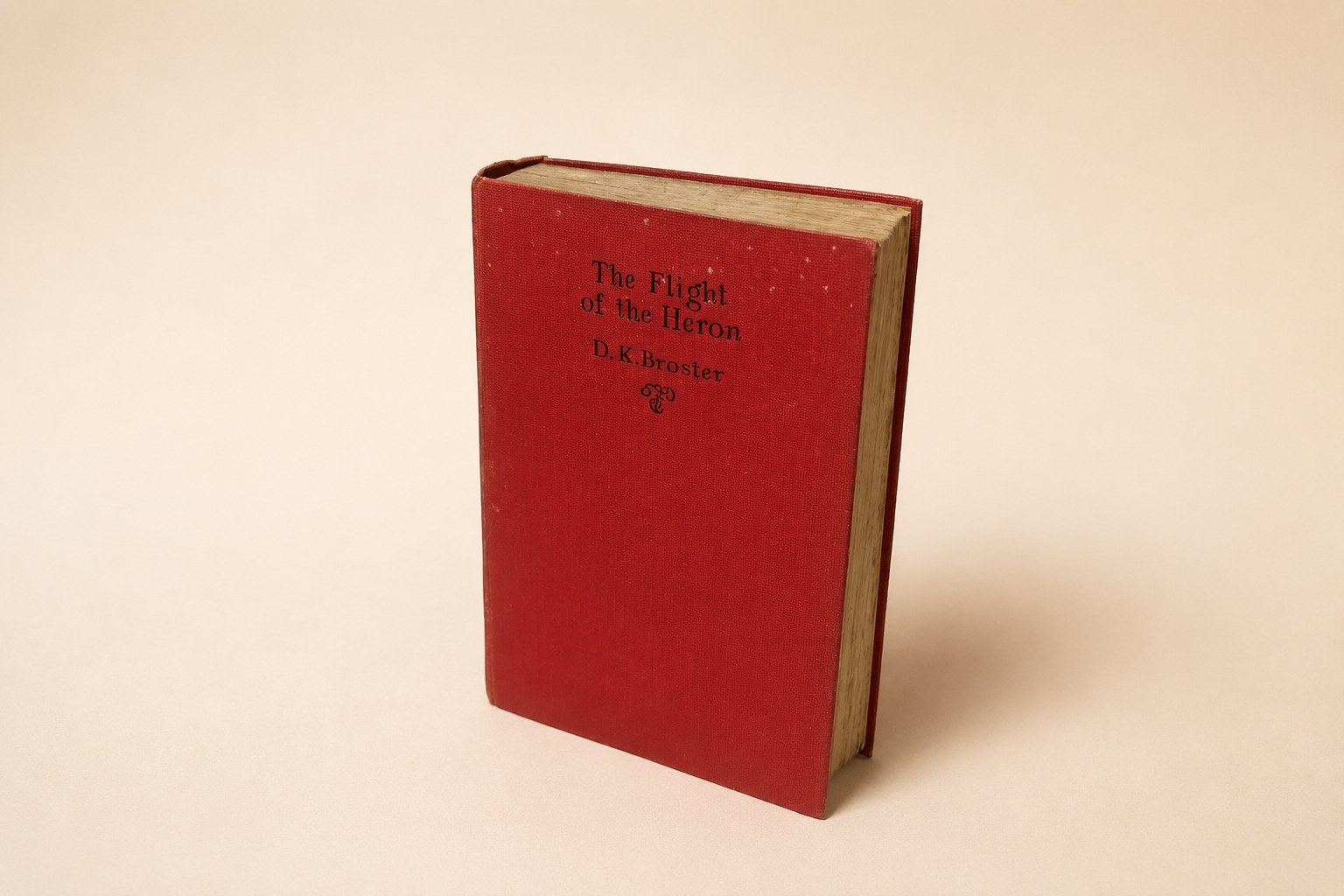
The defining Jacobite novel of the 20th century, built on a heron prophecy and an impossible friendship across enemy lines; this copy from the 1927 cheaper edition, inscribed by its first owner, Dickie Mackenzie.
View object →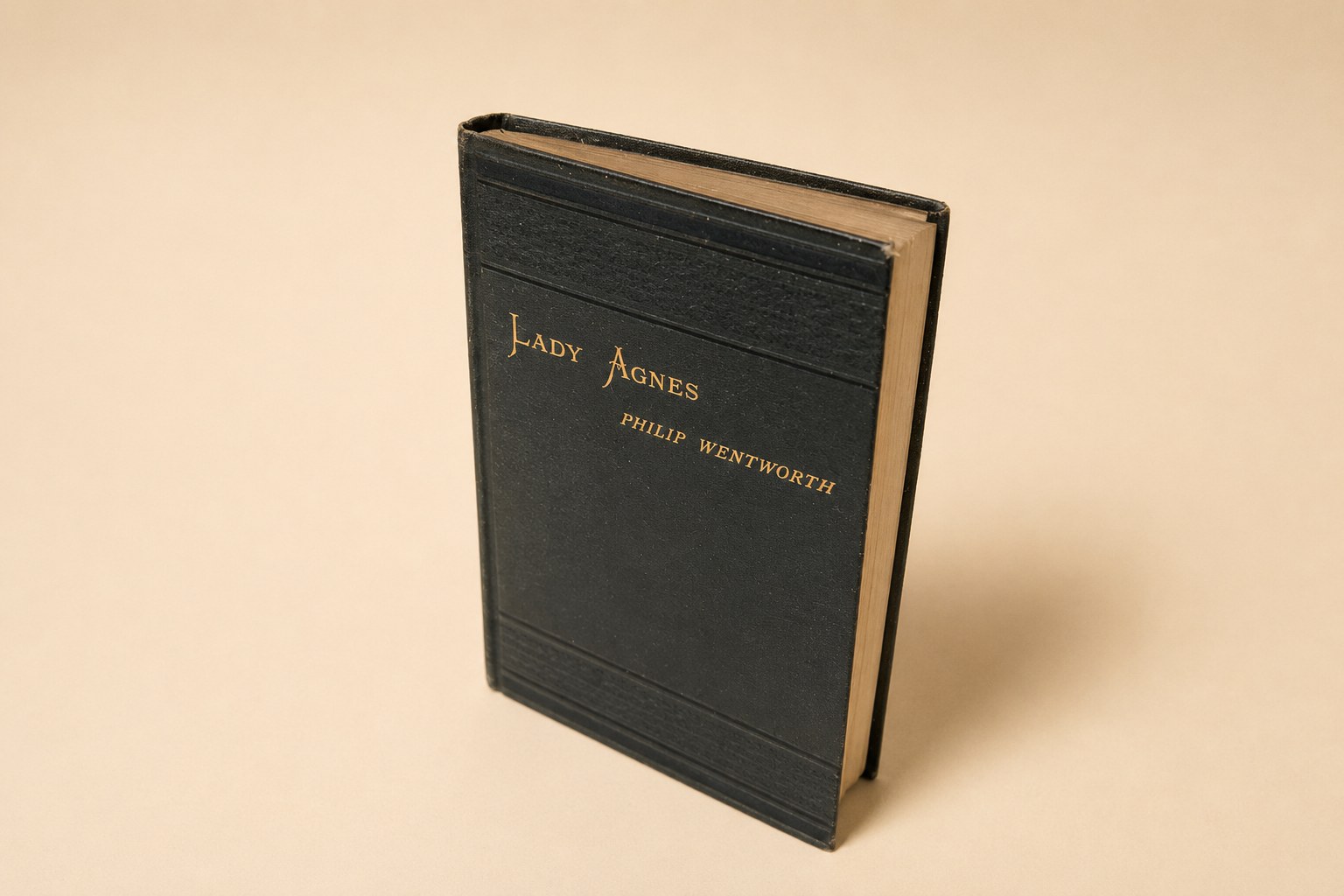
Thirty-one poems by a man history declined to remember: the first and only edition of an unknown Manchester poet's lifework, 1878, with a preface that fires one perfect shot at literary fashion.
View object →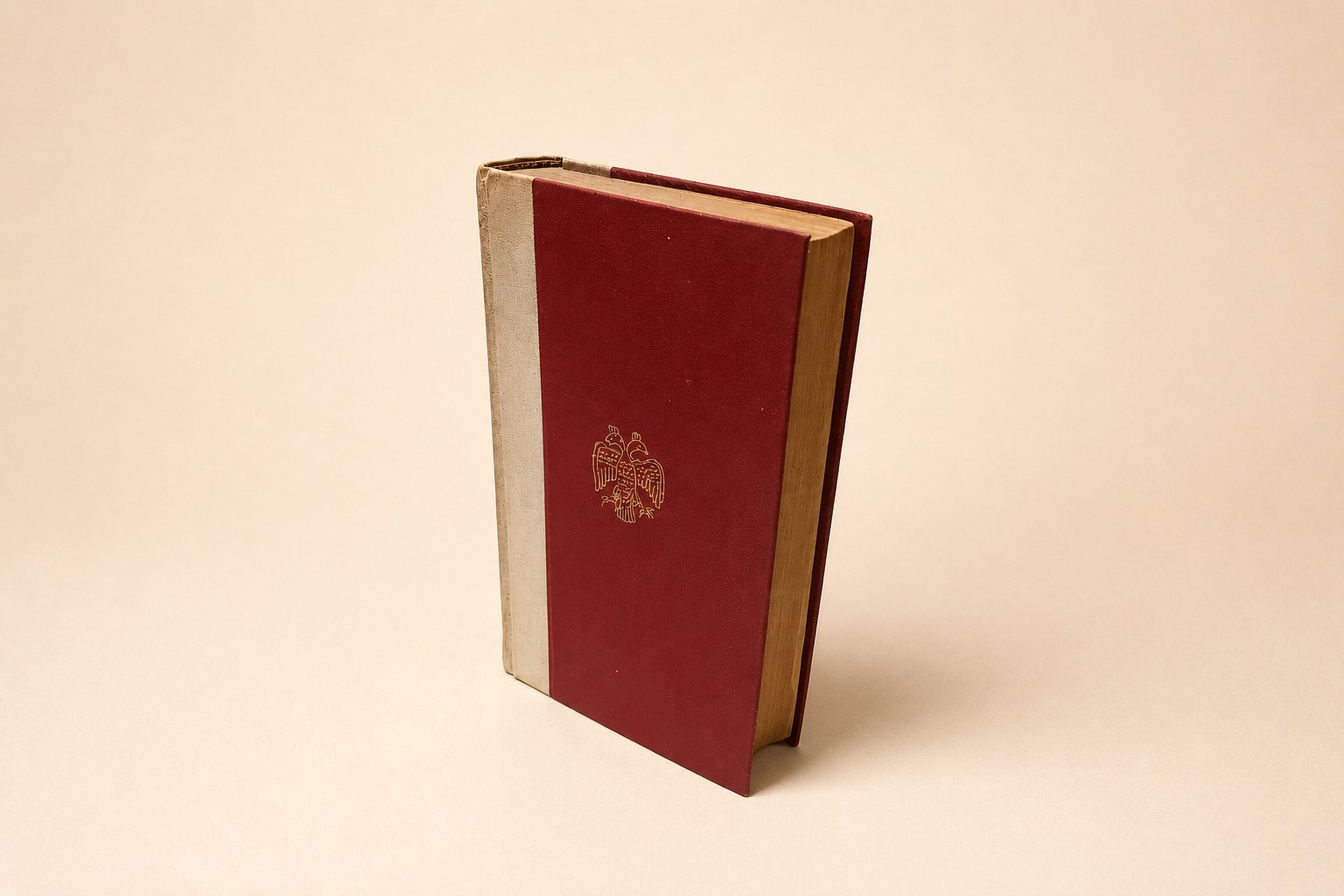
Tolstoy's epic of the 1812 invasion, printed in Britain in 1943, while history repeated itself outside Moscow. The Tolstoy-endorsed Maude translation on wartime paper, with the invasion fold-out map intact.
View object →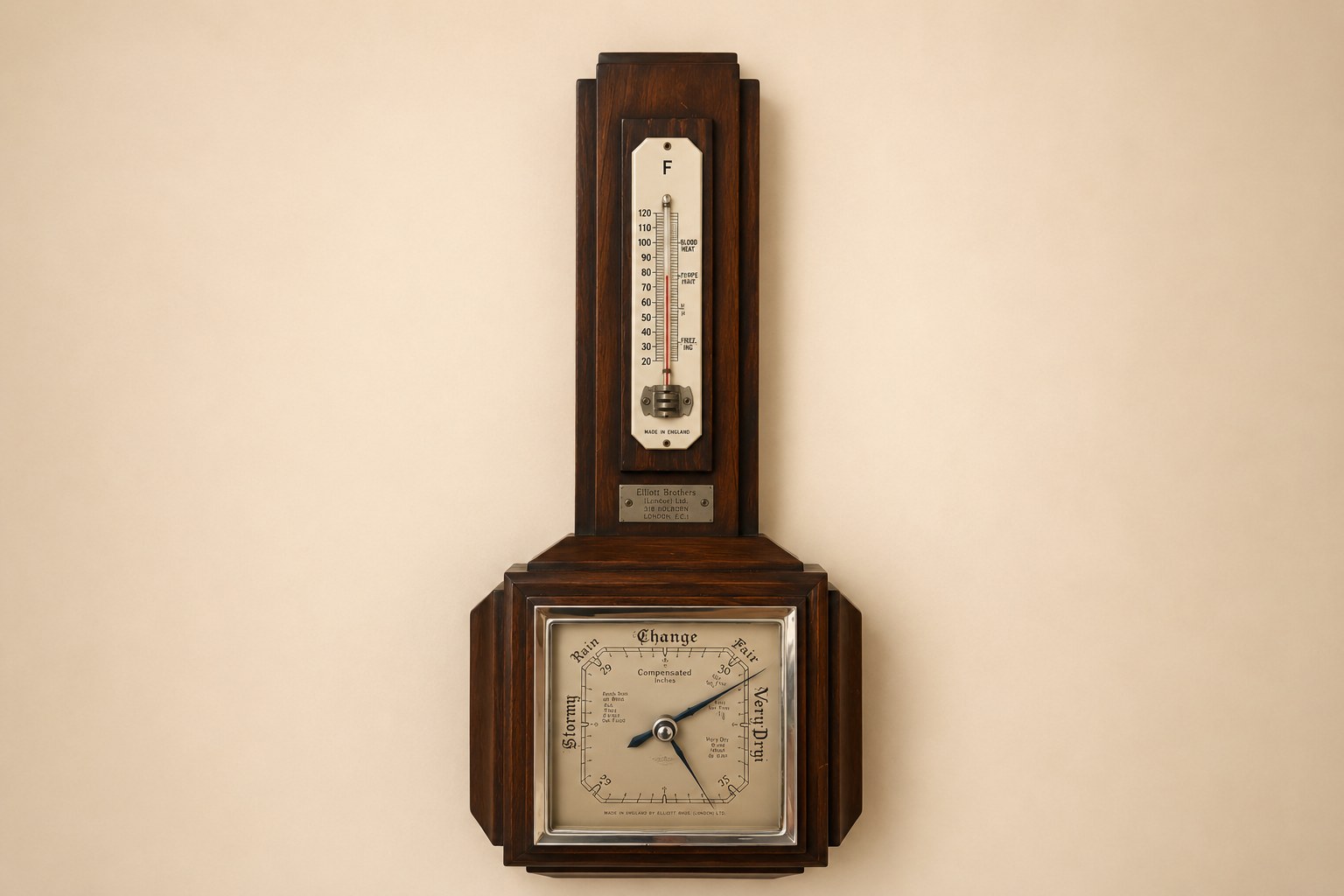
An Art Deco oak weather station with a patented dual-hand forecasting dial, presented by a Cornish football club to one of its own on 22 November 1947, name and date still polished into the brass.
View object →The marks are not damage to the object. The marks are the provenance.
Taken one at a time, each of these is a small curiosity — a name, a date, a faded label. Taken together, they answer the question every collector is eventually asked, usually with a raised eyebrow: why on earth would a used, written-in, second-hand object outrank a pristine one? Because the writing is the value. Each name is a fixed coordinate — a real person, in a real place, on a real day — from which an object's entire history can be triangulated and researched. A blank, mint copy floats free of time. An inscribed one is anchored to it.
That is the quiet promise these seven objects keep. A century from now, long after everyone now living has joined them, these ordinary people will still be findable: a schoolboy in Balham rewarded for his English, a woman in 1906 who liked Byron enough to carry him in her coat, a football official in Saltash thanked in brass. They were never going to make the history books on their own. But they wrote their names in the right places, and the objects have kept them safe ever since. To collect such things is to appoint yourself, a little solemnly, the keeper of other people's hands.