Two books in this collection were Christmas presents, nine years apart, and between them sits the whole emotional history of a decade.
The first: The Great White Chief by Robert M. MacDonald, a Blackie & Son boys' adventure novel of 1908, set in unexplored New Guinea, dedicated to Admiral Moresby, with eight plates by William Rainey and a map of British New Guinea. Its gift inscription is dated Christmas 1918, the first Christmas after the Armistice, barely six weeks after the guns stopped. Somebody chose, for a boy in that strangest of Decembers, a story of empire and exploration from the confident world of 1908: a book from before, given at the exact moment that world ended. Whether the giver meant it as reassurance or simply gave what boys' presents had always been, the date makes it impossible to read innocently now.
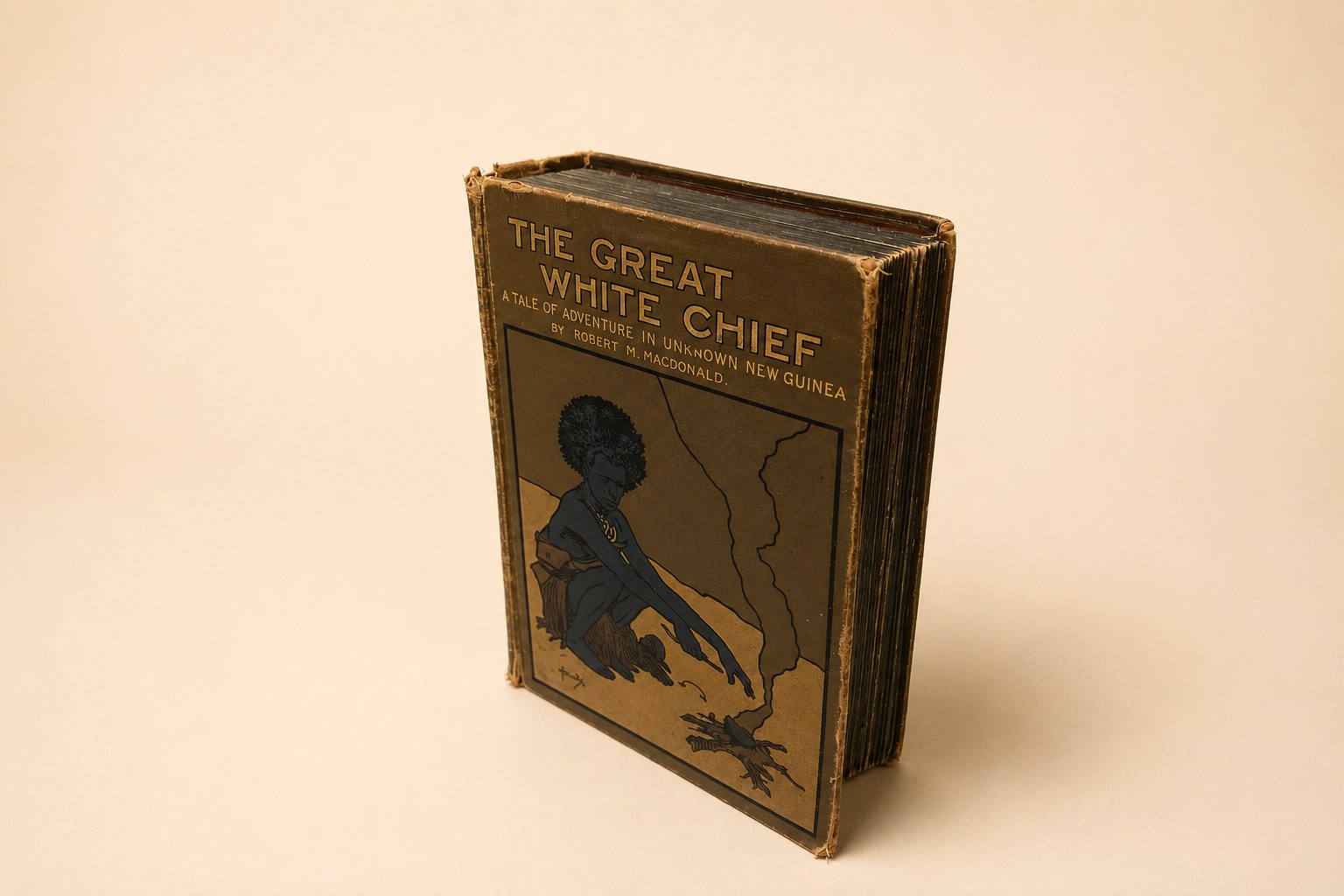
'The characters are real, and the incidents not imaginary': an Edwardian New Guinea adventure that reads like a prospector's disguised memoir, with eight Rainey plates, a folding map, and a Christmas 1918 inscription.
View object →The second: The Flight of the Heron, D. K. Broster's novel of the 1745 rising, in the cheaper 3/6 edition of February 1927, inscribed 'Xmas 1927'. Nine years on, the bestselling gift was no longer imperial adventure but a story of doomed loyalty: a beautiful, honourable, lost cause. The generation that had buried its sons read defeat differently, and what it gave at Christmas had changed accordingly.
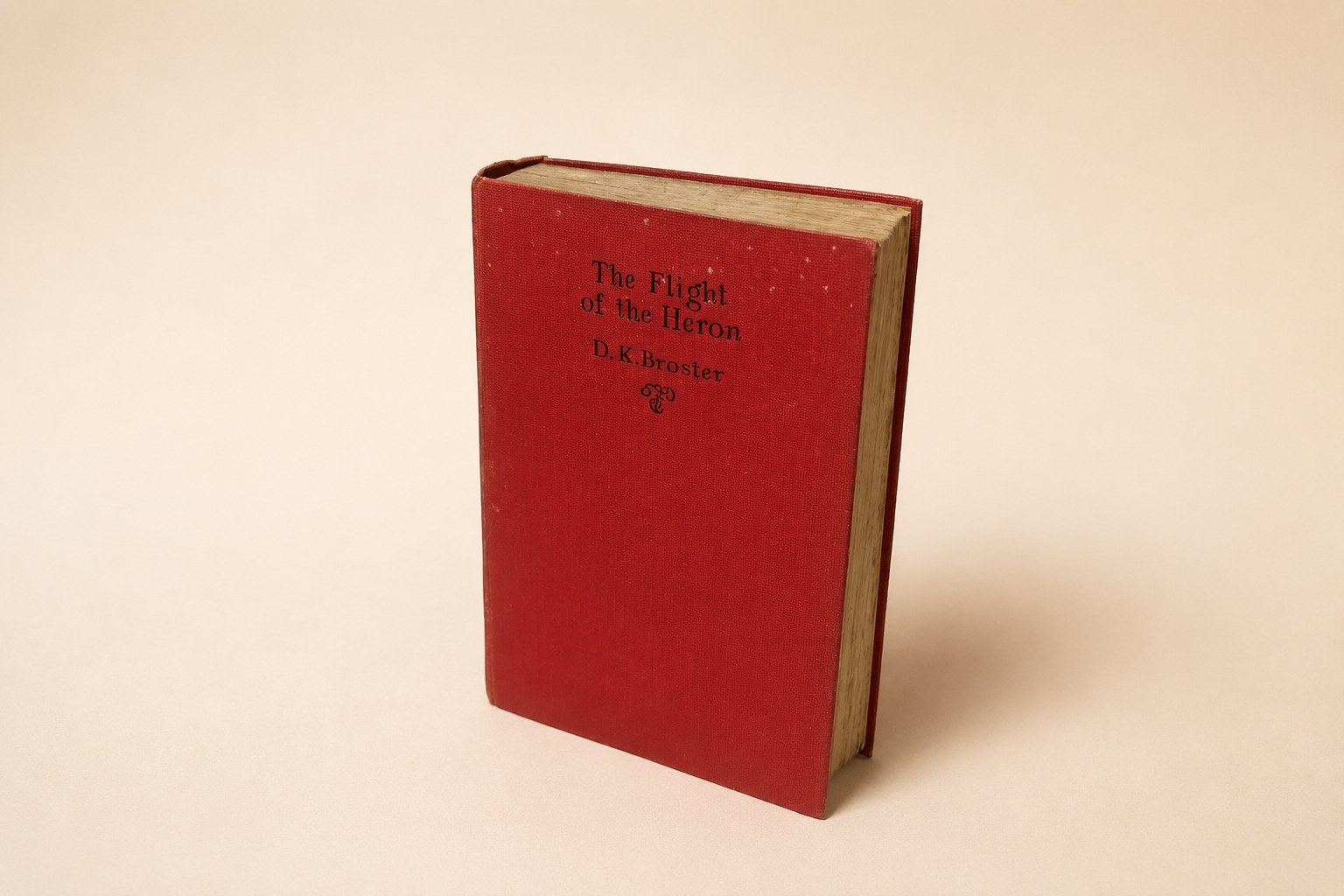
The defining Jacobite novel of the 20th century, built on a heron prophecy and an impossible friendship across enemy lines; this copy from the 1927 cheaper edition, inscribed by its first owner, Dickie Mackenzie.
View object →A gift inscription is the most honest provenance there is: it records not just ownership but intention. Someone thought this book belonged with this person at this moment. These two Decembers, 1918 and 1927, sit on the shelf like bookends around the interwar mood: the empire story given as the empire's certainties collapsed, and the lost-cause story given when loss had become the thing Britain understood best.