Books & Literature
War and Peace
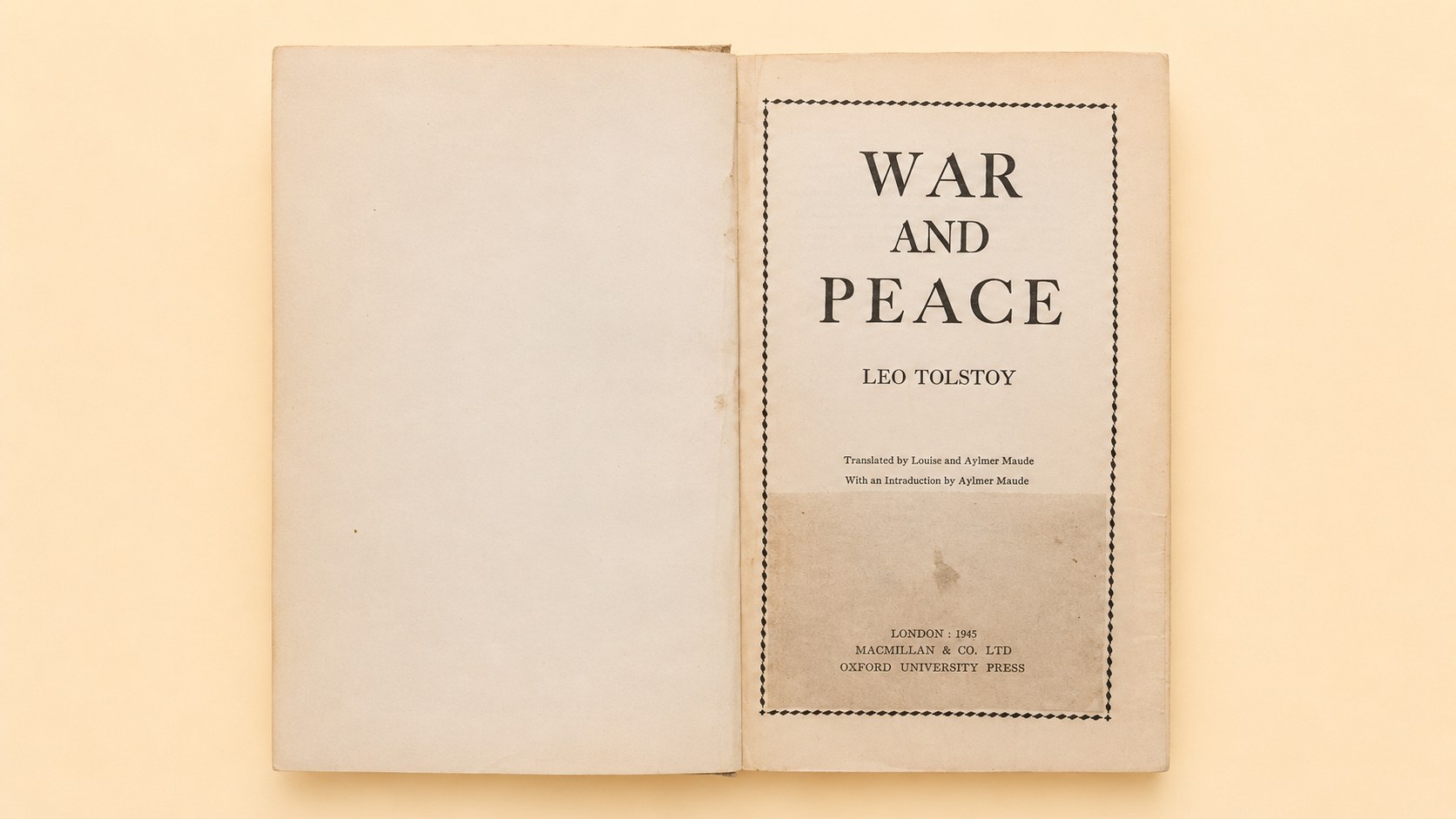
Tolstoy's epic of the 1812 invasion, printed in Britain in 1943, while history repeated itself outside Moscow. The Tolstoy-endorsed Maude translation on wartime paper, with the invasion fold-out map intact.
A Private Archive of Antiques & Historical Objects
Books & Literature
Tolstoy's epic of the 1812 invasion, printed in Britain in 1943, while history repeated itself outside Moscow. The Tolstoy-endorsed Maude translation on wartime paper, with the invasion fold-out map intact.
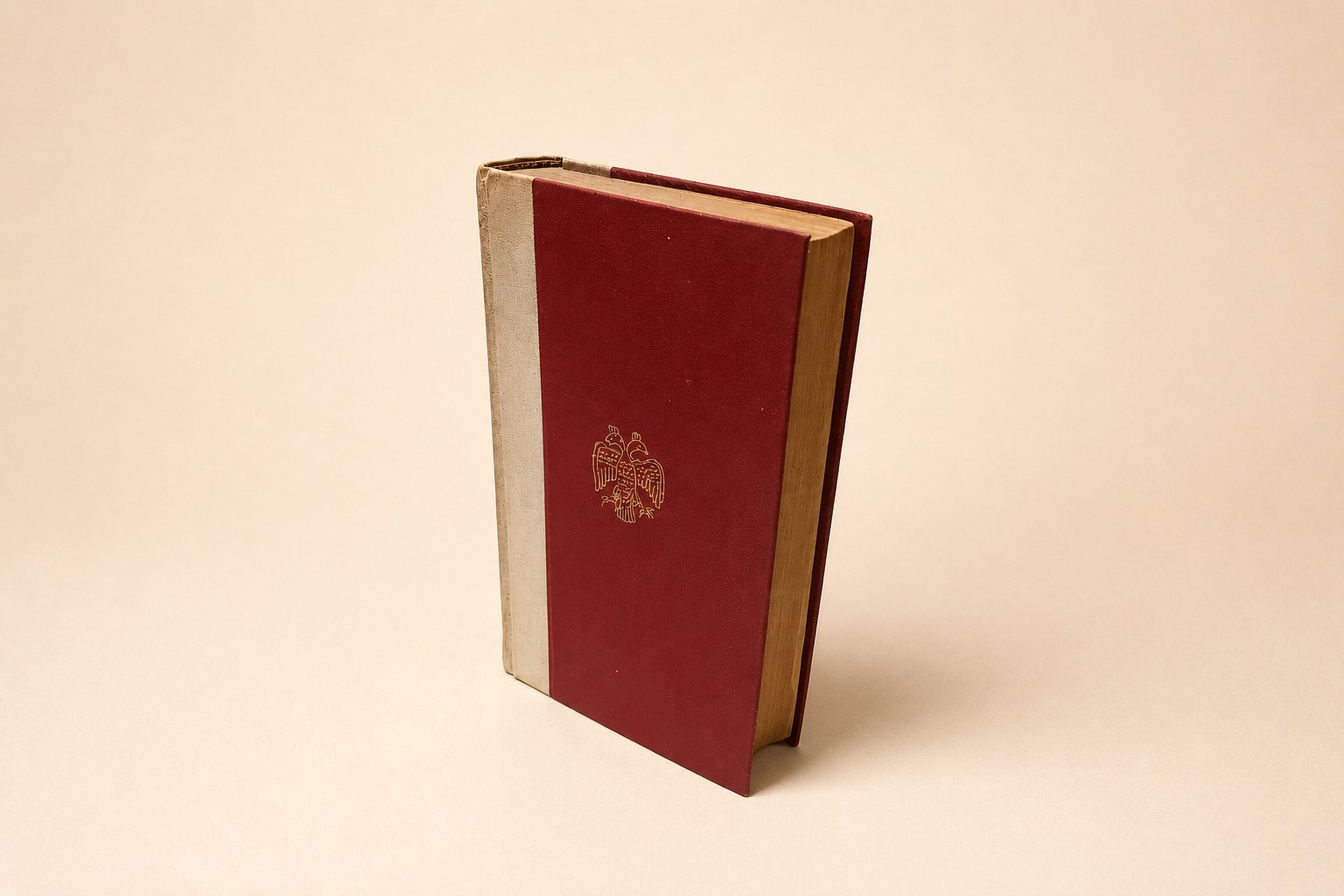
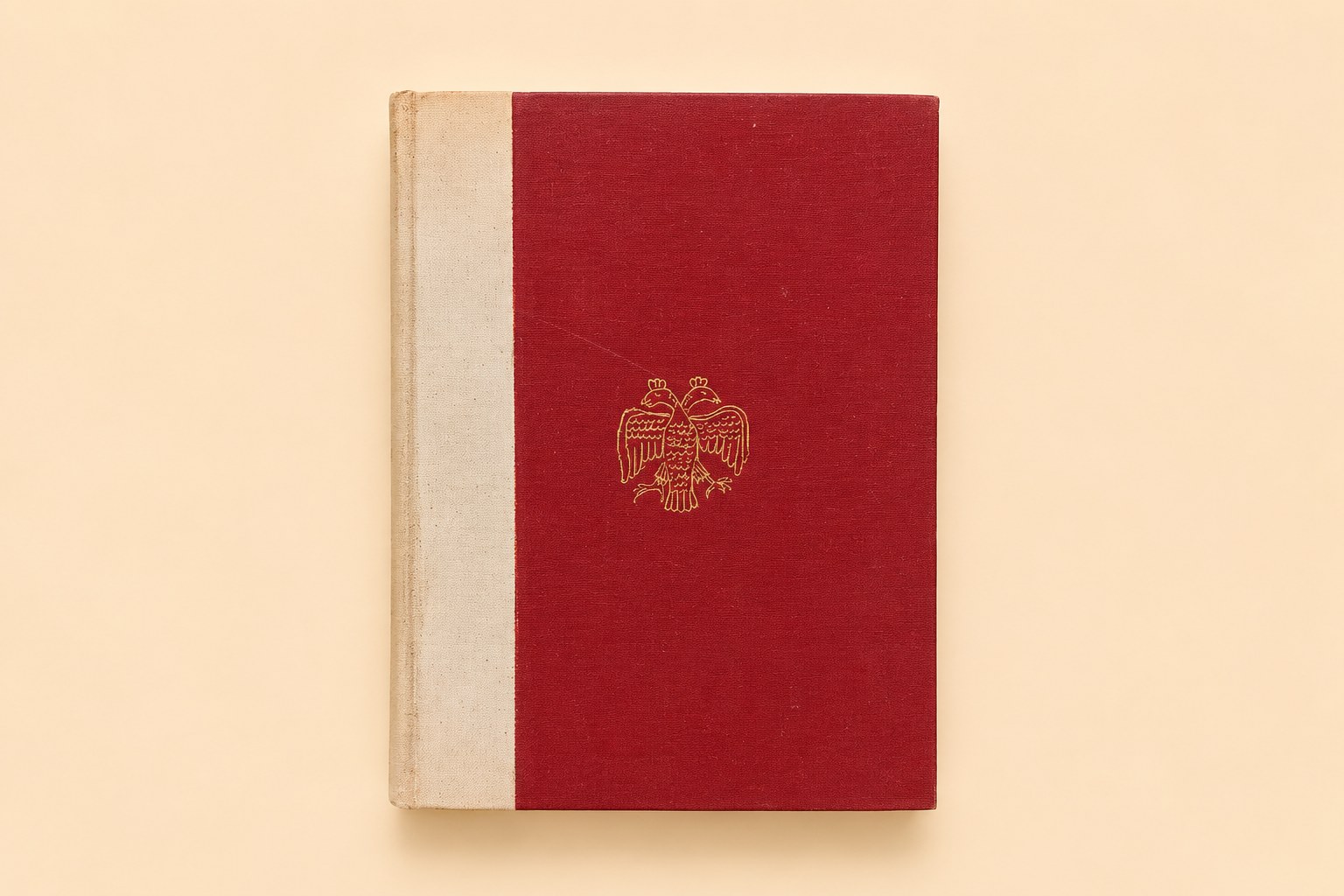
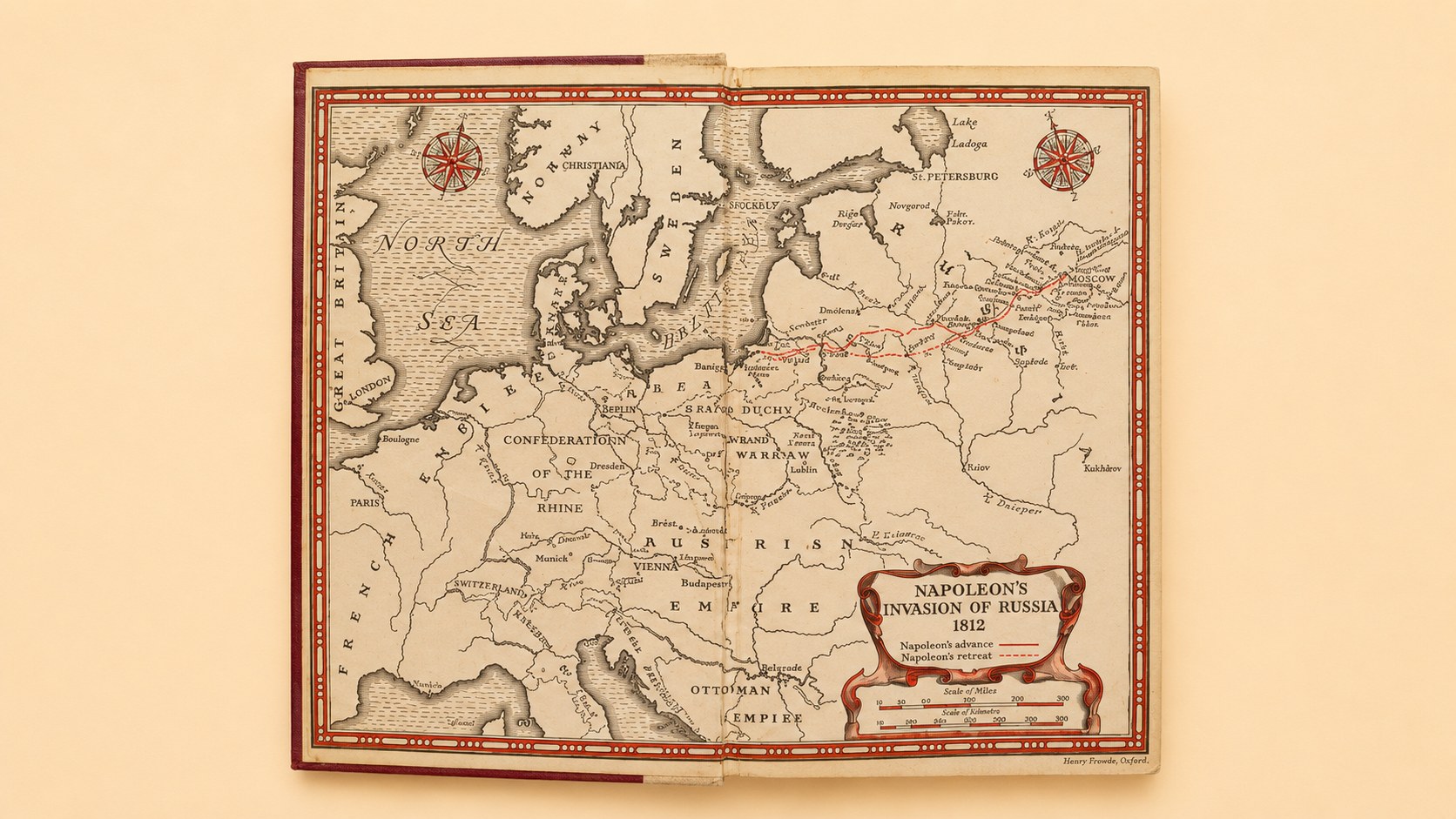
A book about Napoleon's invasion of Russia, printed in Britain in 1943, while another army was freezing outside Moscow. The timing is no coincidence: when Hitler invaded the Soviet Union, British readers reached for Tolstoy in enormous numbers, and publishers reprinted War and Peace on whatever paper the war economy allowed. This copy is exactly that artefact: tissue-thin wartime pages, a gilt Romanov double-headed eagle on the cover, and a fold-out map of the 1812 invasion that any reader of 1943 would have studied with a shiver of recognition.
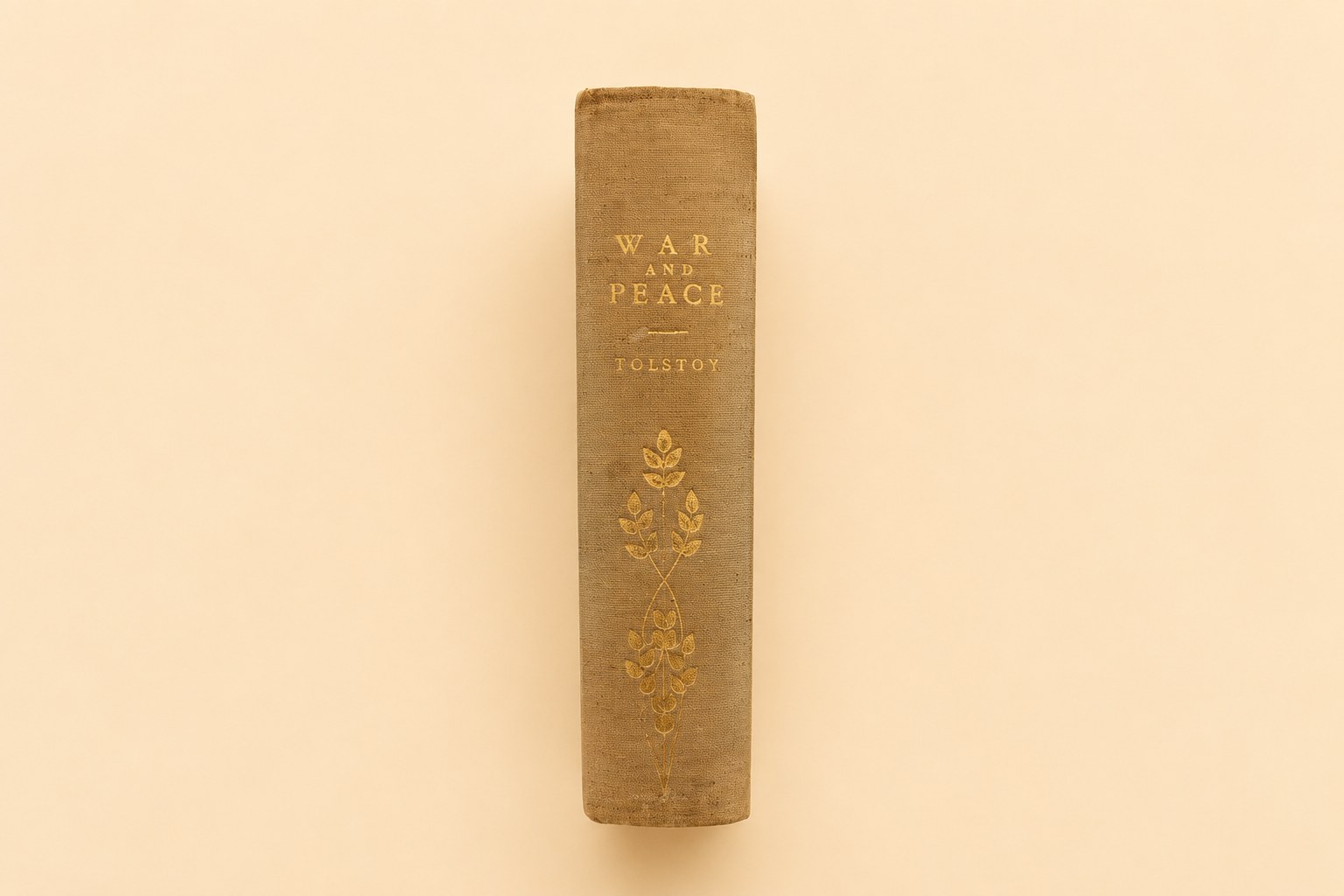
This is War and Peace in the Maude translation, issued jointly by Macmillan and Oxford University Press in 1942 and here in its 1943 reprint, printed by R. & R. Clark of Edinburgh. The binding is striking for an austerity production: two-tone red boards with a cream cloth spine, the front board stamped in gilt with the double-headed eagle of Imperial Russia. The pages are notably thin (wartime economy paper), and bound in at the rear is the fold-out map of Napoleon's invasion of Russia, 1812, tracing the advance and the catastrophic retreat through Smolensk, Borodino, Moscow, and the Berezina.
Leo Tolstoy (1828–1910) needs little introduction; his translators deserve more than they usually get. Aylmer Maude and his wife Louise lived for years in Moscow, spoke flawless Russian, and knew Tolstoy personally; Aylmer wrote his biography, and Louise led on the fiction while Aylmer handled the philosophy. Tolstoy's verdict on them is the most valuable blurb in translation history: "Better translations, both for knowledge of the two languages and for penetration into the very meaning of the matter translated, could not be invented." Their War and Peace became the standard English text for half a century, and this Macmillan/OUP setting, with Aylmer Maude's introduction, was its definitive mid-century home.
The novel follows five aristocratic families through the Napoleonic Wars (Austerlitz, the comet of 1811, Borodino, the burning of Moscow, the retreat) and pauses, notoriously and magnificently, to argue about whether "great men" drive history at all. In 1943 that argument had stopped being academic. The parallel between 1812 and the Eastern Front was on every front page; Tolstoy's account of an invader swallowed by Russian distance and winter read like prophecy fulfilled, and wartime reprints like this one met a genuine public hunger. Reading this specific copy means reading the book through that double exposure, exactly as its first owners did.
The last page carries a rubber stamp: D. A. McLean, Bookseller, 11 Howard St., Belfast, placing the book in Northern Ireland at some point in its eighty-year life, a small verifiable waypoint in an otherwise unrecorded journey. Condition is excellent for a wartime printing: no foxing, spine sound, boards clean, with a single old tissue repair to the title-page imprint area. The fold-out map is intact, frequently the first casualty in copies of this edition.
Frequently named the greatest novel ever written, War and Peace exists in this collection in arguably its most historically charged form: the authorised translation, in a wartime printing whose very paper testifies to the moment, dressed in the dead empire's eagle while the novel's subject repeated itself in the same geography. Books about war are common. Books about a war, printed during its uncanny historical echo, on paper rationed by it, are something else entirely.
Provenance
Rubber stamp of D. A. McLean, Bookseller, 11 Howard St., Belfast on last page; otherwise unrecorded journey. Edition self-dating: 1943 reprint stated on title verso.
England South
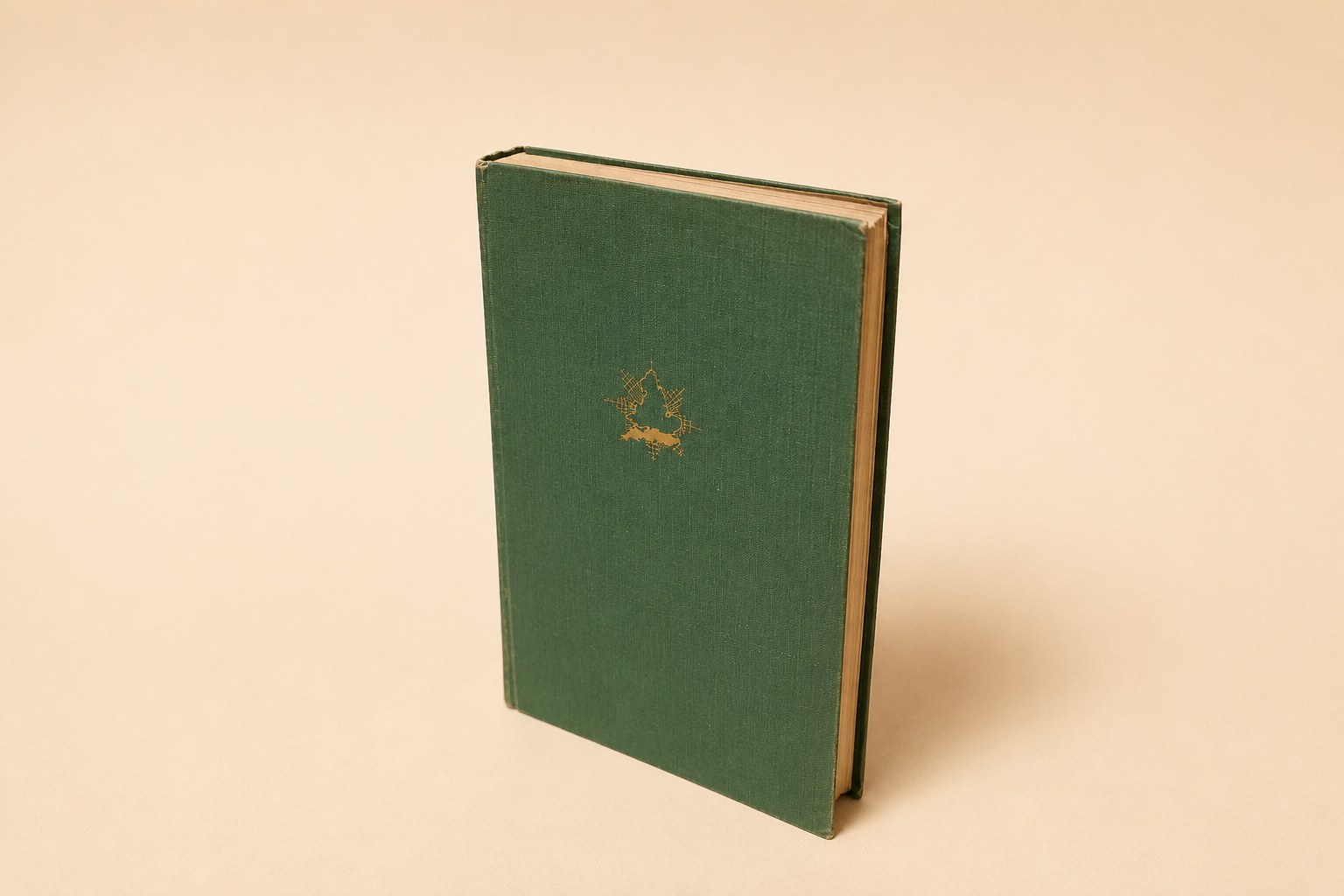
Forty years of sketch-books opened in the year England needed them most: the first volume of Sydney R. Jones's illustrated journey through the southern counties, from London to the very end of Cornwall (1948).
England West
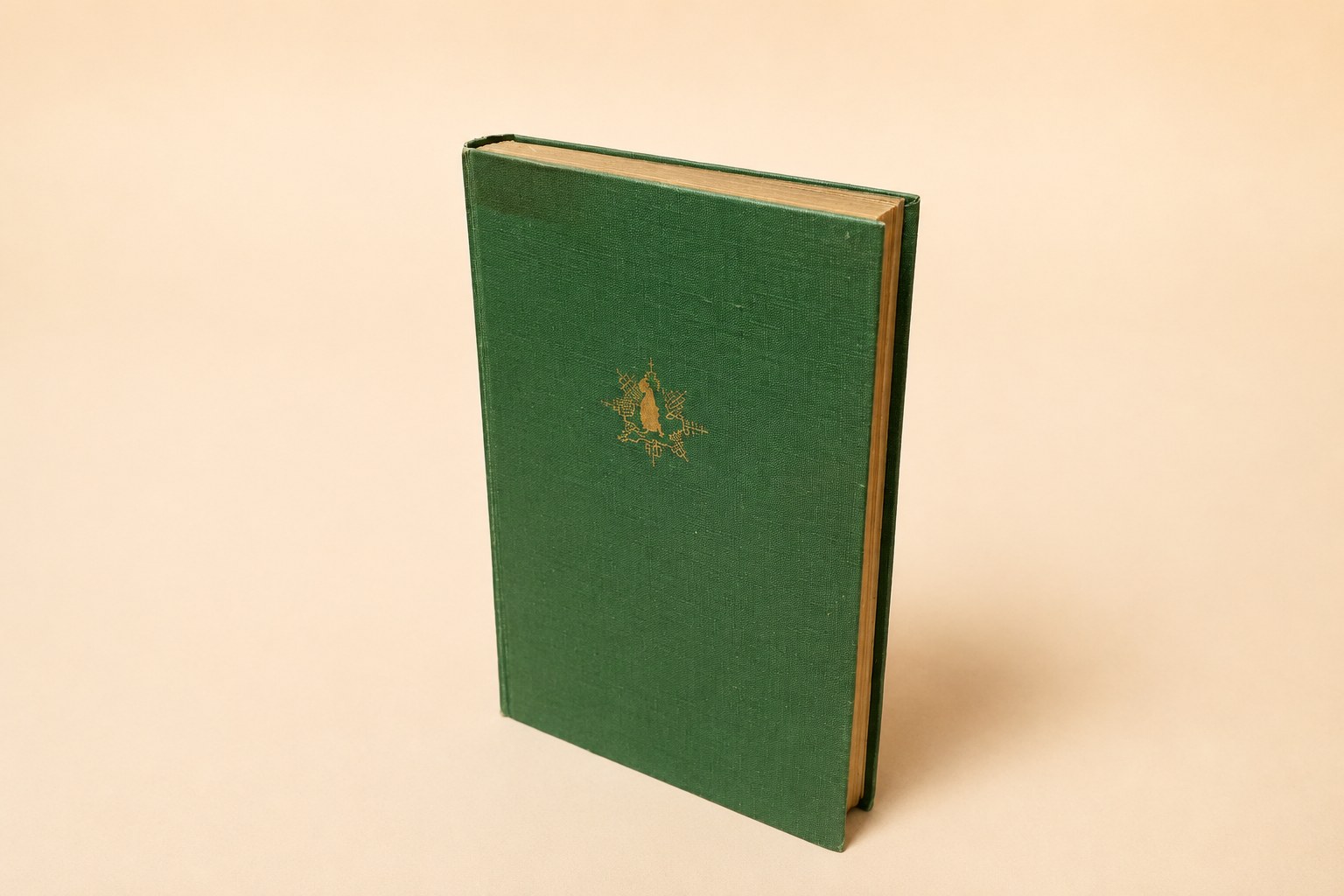
The trilogy's longest journey: Thames to Hadrian's Wall through Cotswold wool churches, Shakespeare country, the Marches, and the industrial North. The richest of the three volumes in architectural range (1950).
England East
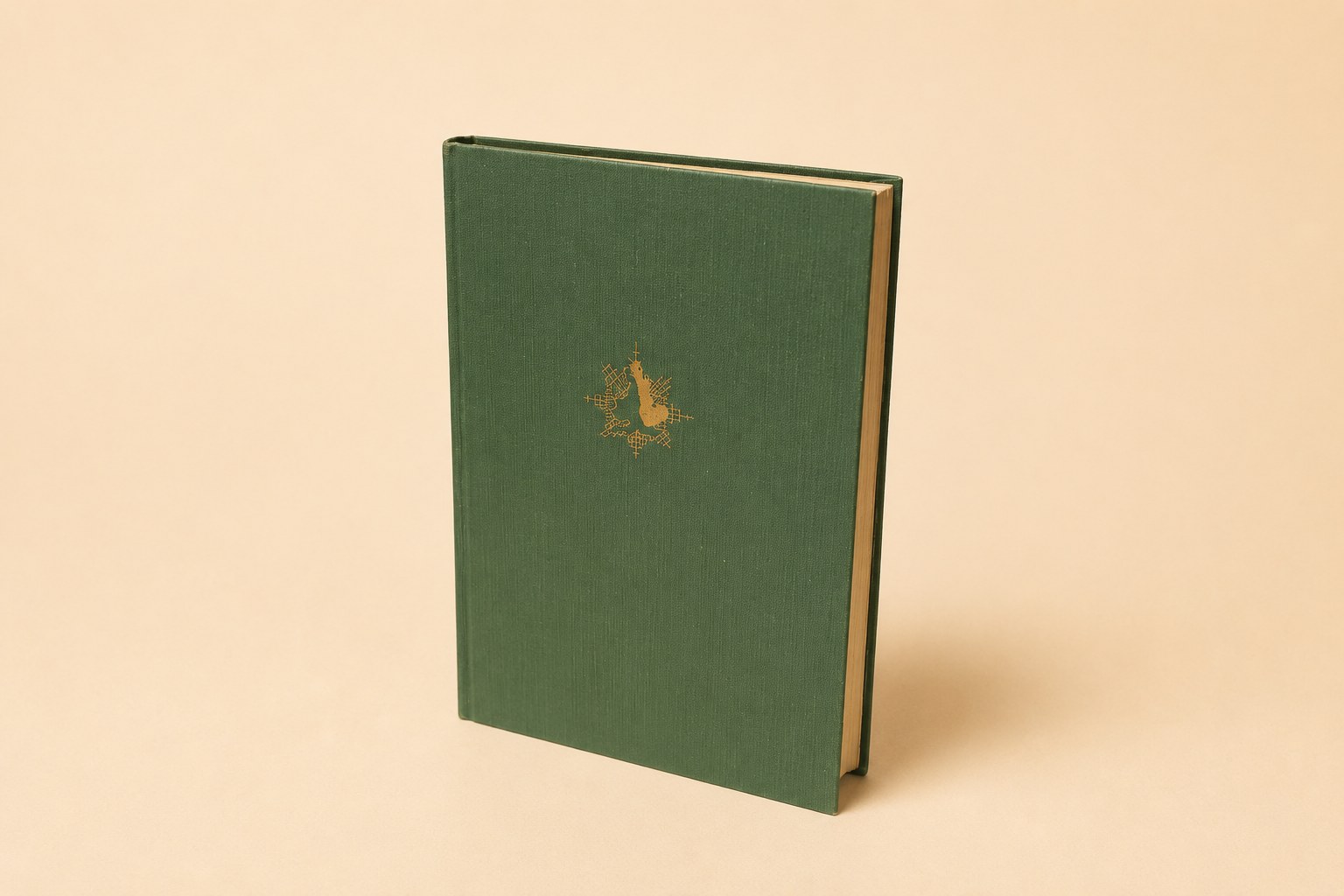
The farewell volume: Jones closes his life's work with a journey from the Thames to the Scottish border, saluting Durham coalminers alongside Northumbrian castles, under an epigraph about ashes and graves (1954).