Books & Literature
Poems by Lord Byron
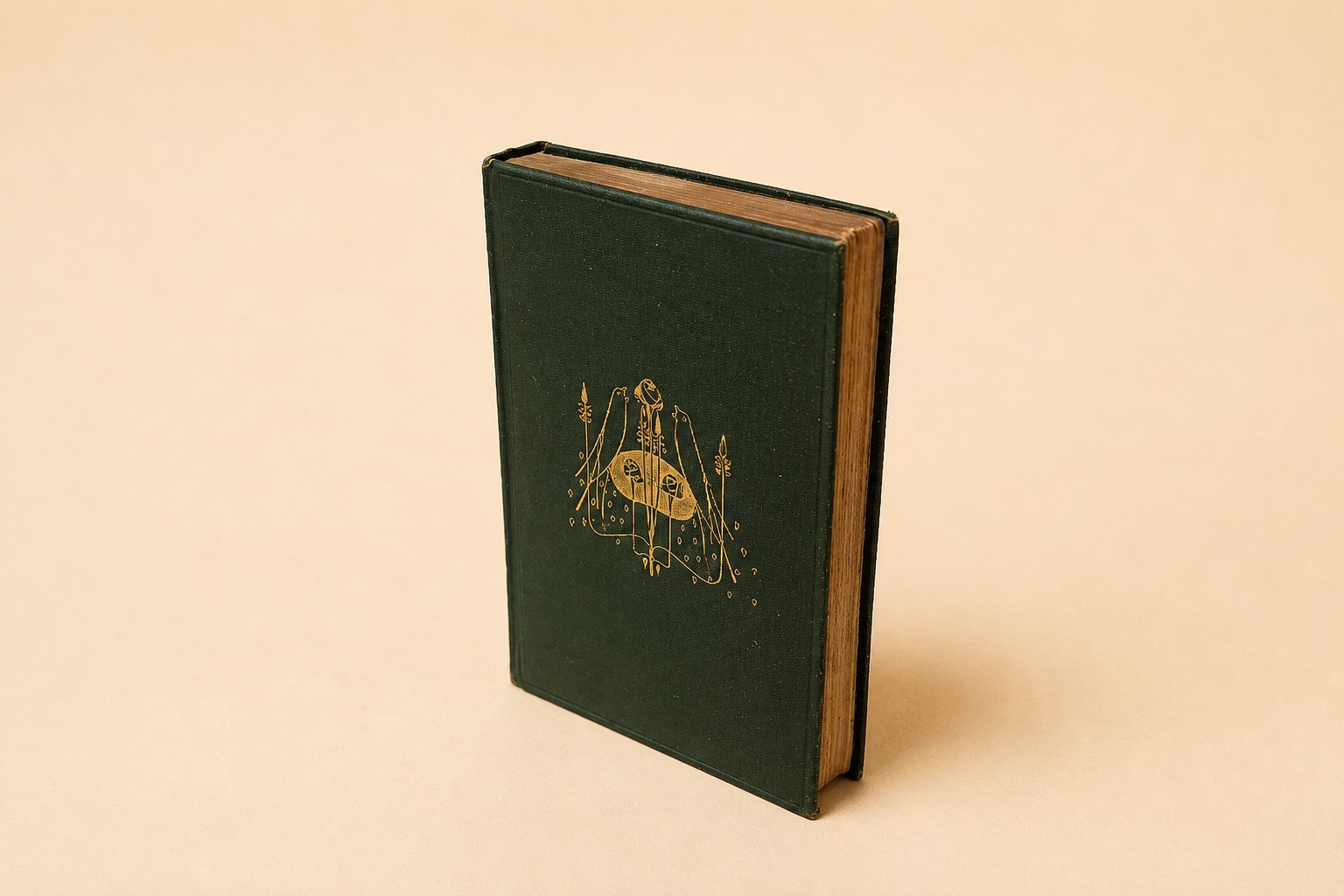
Byron in Art Nouveau gilt, introduced by the critic who brought Symbolism to England, signed in pencil by Cecile Mary Davies two days before Valentine's Day, 1906. Price: one shilling and sixpence.
A Private Archive of Antiques & Historical Objects
Books & Literature
Byron in Art Nouveau gilt, introduced by the critic who brought Symbolism to England, signed in pencil by Cecile Mary Davies two days before Valentine's Day, 1906. Price: one shilling and sixpence.
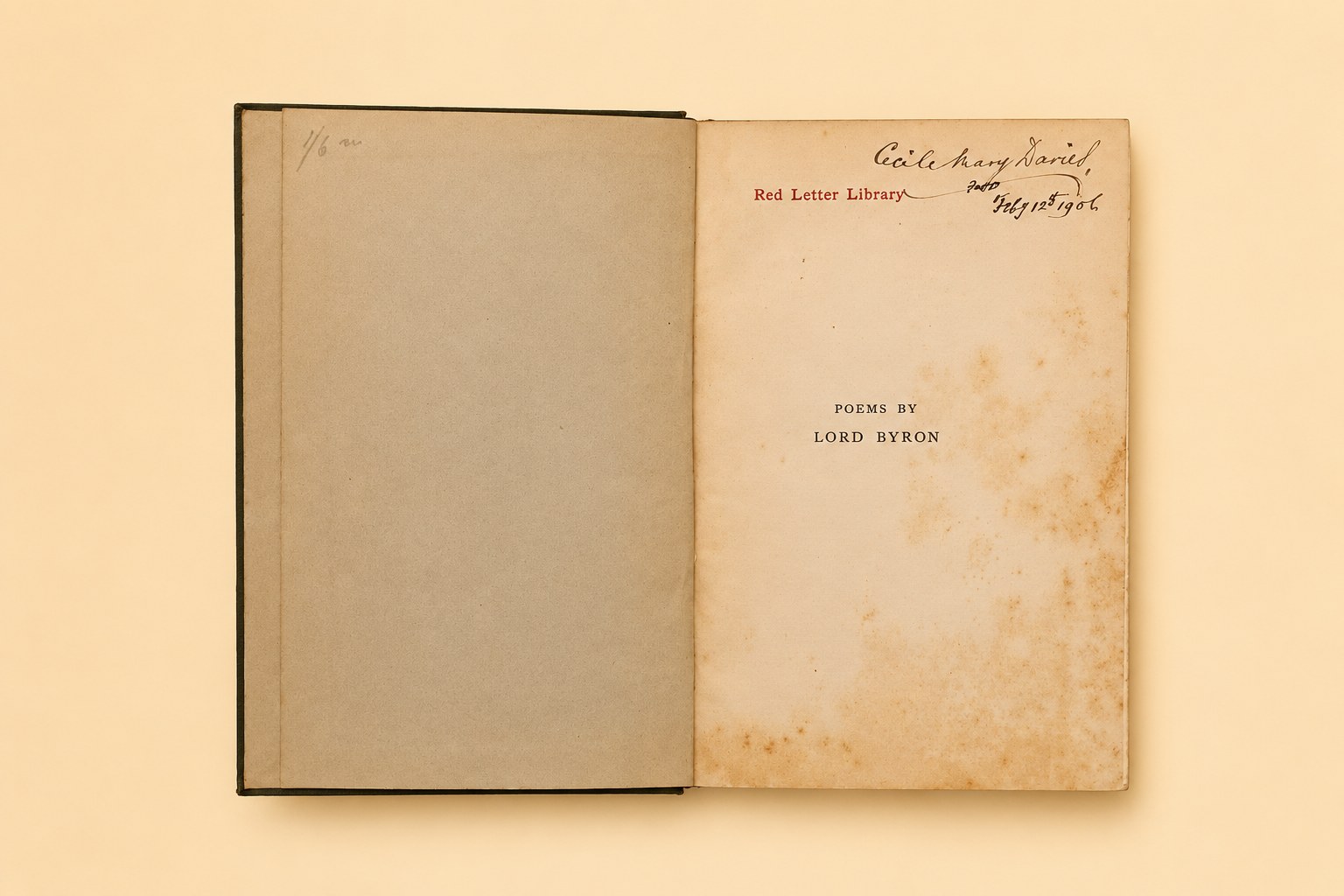
On the 12th of February 1906, two days before Valentine's Day, someone named Cecile Mary Davies wrote her name in pencil inside this little green and gold book of Byron's poems. It had cost one shilling and sixpence; the price is pencilled inside too. Byron had been dead for eighty-two years, and his poems of scandal, exile, and doomed love were being sold as pocket-sized Art Nouveau objects to Edwardian readers. Whether Cecile bought it for herself or received it from an admirer, the timing invites speculation, though speculation is all it is.
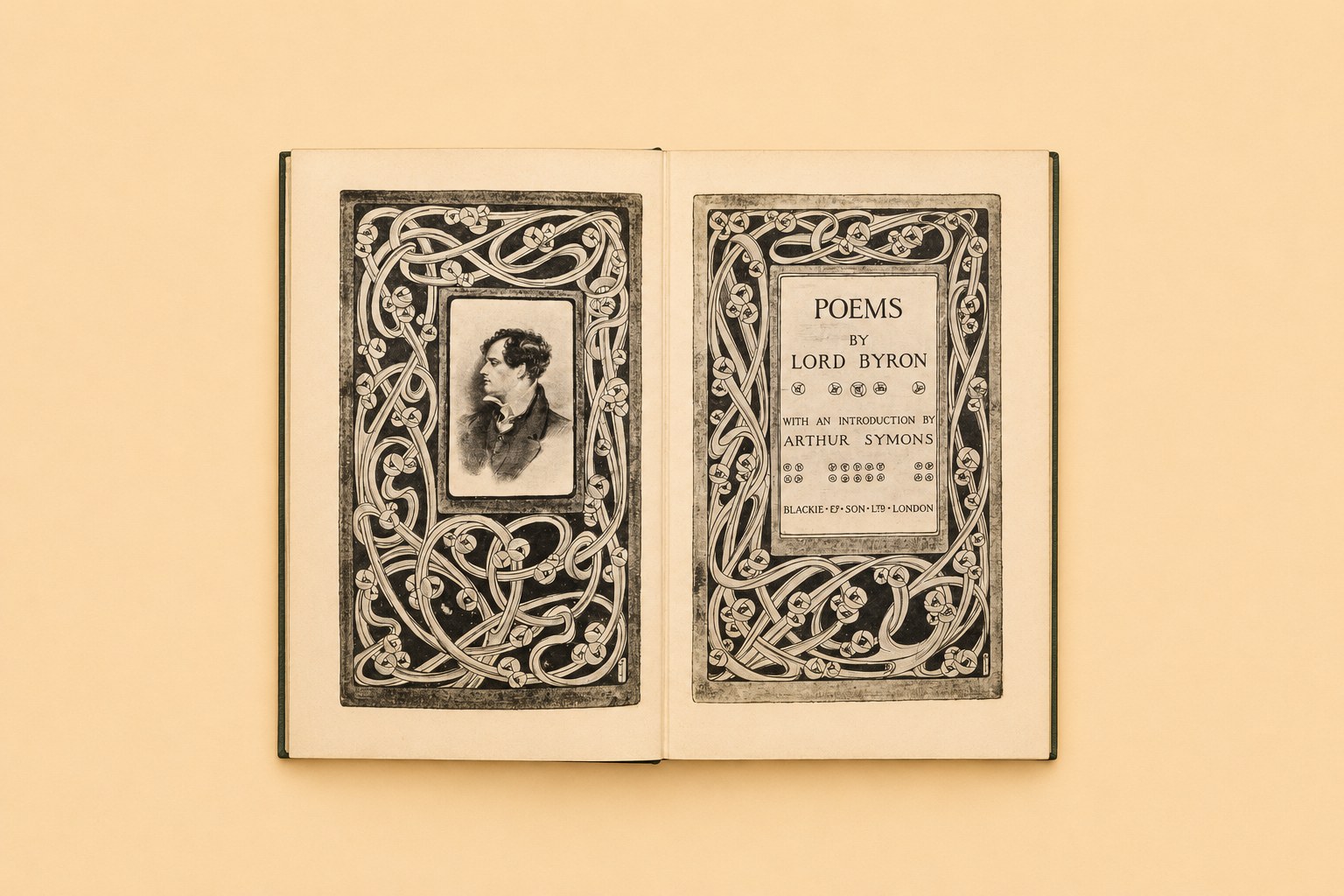
Poems by Lord Byron is a 279-page pocket anthology from Blackie and Son's Red Letter Library — a series initiated by Blackie in 1902, whose Poets volumes were edited by Alice Meynell, the poet and essayist once canvassed for the Laureateship — with an introduction by Arthur Symons. The series' design is its glory: dark green pebbled cloth with gilt Art Nouveau ornament, interlaced vine-and-blossom endpapers in olive on cream, gilt page edges, and a frontispiece portrait of Byron in a matching decorated border. The look is the Glasgow Style: Blackie's art director from 1893 was Talwin Morris, colleague and friend of the Mackintosh circle, who made the firm's bindings some of the most recognisable Art Nouveau design in Britain. The volume is undated, as series volumes were; the 1906 inscription and series context place it at c.1904–1906, with the printer's code B 213 marking its place in Blackie's sequence.
The selection runs Byron's whole keyboard: She Walks in Beauty and When We Two Parted; The Prisoner of Chillon; the satirical Vision of Judgment; generous helpings of Don Juan including the shipwreck and Haidée episodes; and it closes, devastatingly, with the poem Byron wrote at Missolonghi on his thirty-sixth and final birthday, three months before the fever killed him.
The introducer is the unexpected treasure here. Arthur Symons (1865–1945) was the most important English channel for French Symbolism: editor of The Savoy with Aubrey Beardsley, member of the Rhymers' Club beside Yeats, and author of The Symbolist Movement in Literature (1899), the book that introduced Verlaine and Mallarmé to English readers and directly shaped the young T. S. Eliot. His Byron introduction was written at the height of those powers, before the mental collapse of 1908 from which his originality never fully returned. A decadent-movement critic re-presenting the original celebrity rebel to suburban Edwardian readers: the pairing is its own small essay in literary history.
Byron (1788–1824) woke up famous in 1812, scandalised England, exiled himself in 1816, wrote Don Juan across Italy, and died at thirty-six in the Greek War of Independence: the first modern celebrity, and the only poet on record to have a heartthrob and a national hero's death. By 1900 his canonisation was complete, and series like the Red Letter Library (gilt, pocketable, priced at 1/6) existed to turn canonical poets into desirable personal possessions for the mass middle-class market. This book is exactly that transaction, preserved.
The half-title carries the pencil inscription Cecile Mary Davies, Feby 12th 1906, written just above the red-printed series title; the rear endpaper carries the pencilled price 1/6. Nothing further about Cecile has been traced. Condition is good: the gilt ornament and page edges bright, the Art Nouveau endpapers clean: a book that was clearly treasured, as its designers intended.
Four notable lives intersect in this small object: Byron, the original celebrity poet, dead at thirty-six in a Greek swamp; Symons, the brilliant critic two years from his own collapse, brokering Romanticism to a new century; Alice Meynell, the series editor who chose what the new century's readers would hold in their pockets; and Talwin Morris, whose Glasgow Style gilt made it a treasure. And a fifth, unrecorded: Cecile Mary Davies, an ordinary Edwardian reader who signed her name in February 1906 and vanished from the record. The book is what the best small antiques always are: a coincidence of stories, bound.
Provenance
Pencil ownership inscription 'Cecile Mary Davies, Feby 12th 1906' on half-title; pencilled price 1/6 on rear endpaper. Owner untraced. Inscription provides a firm terminus for the undated series volume (c.1904–1906).
England South
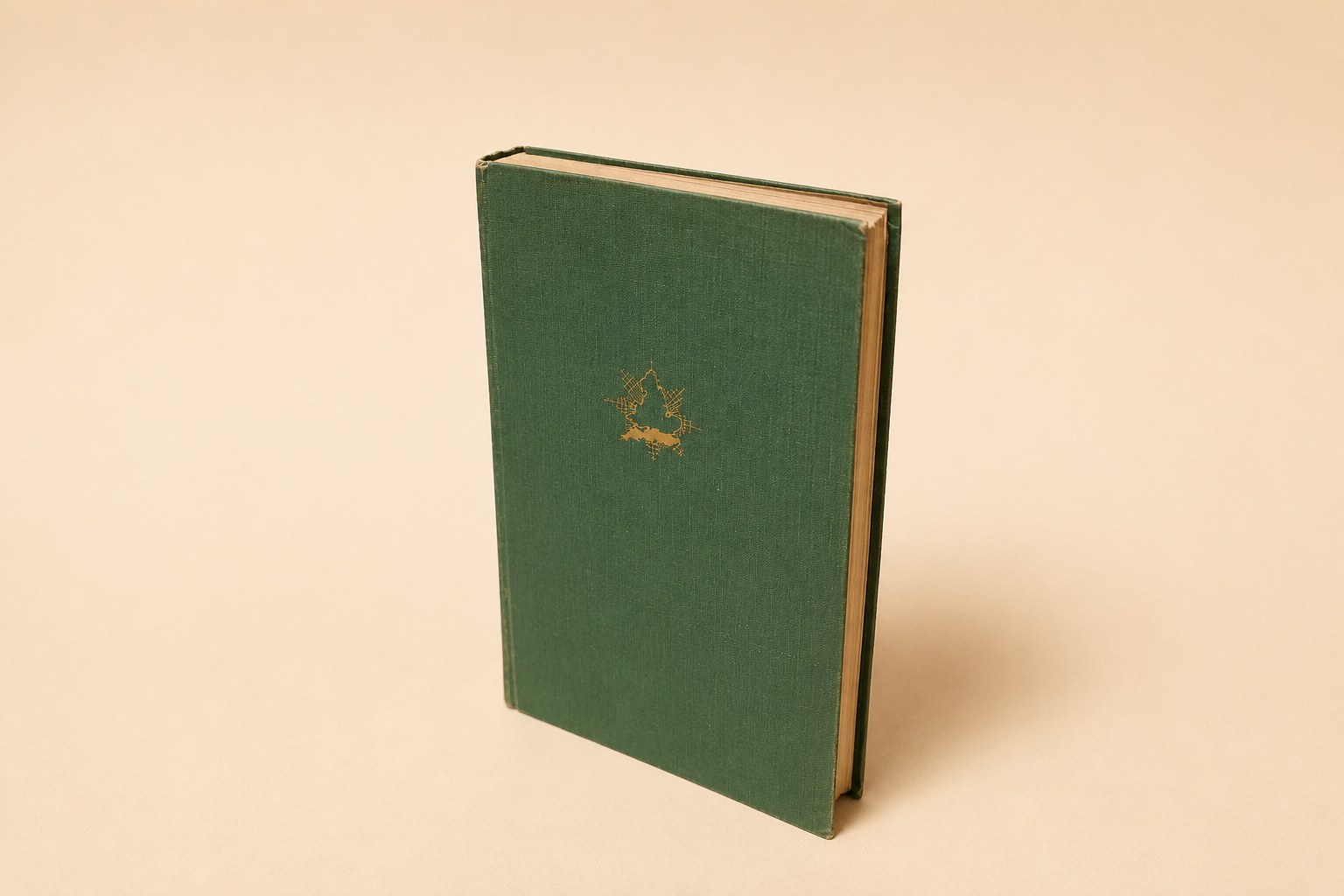
Forty years of sketch-books opened in the year England needed them most: the first volume of Sydney R. Jones's illustrated journey through the southern counties, from London to the very end of Cornwall (1948).
England West
The trilogy's longest journey: Thames to Hadrian's Wall through Cotswold wool churches, Shakespeare country, the Marches, and the industrial North. The richest of the three volumes in architectural range (1950).
England East
The farewell volume: Jones closes his life's work with a journey from the Thames to the Scottish border, saluting Durham coalminers alongside Northumbrian castles, under an epigraph about ashes and graves (1954).