Books & Literature
Fifty Amazing Stories of the Great War
One of Odhams' vast 1936 omnibus volumes: fifty first-hand stories of the First World War told largely by men who fought it, in flexible gilt-stamped covers.

A Private Archive of Antiques & Historical Objects
Books & Literature
One of Odhams' vast 1936 omnibus volumes: fifty first-hand stories of the First World War told largely by men who fought it, in flexible gilt-stamped covers.
In 1936 — eighteen years after the Armistice, and three years before the next war began — Odhams Press gathered fifty first-hand stories of the First World War into a single fat, flexible, gilt-stamped omnibus and sold it into British homes by subscription. It is not an official history. It is something more revealing: a portrait of how interwar Britain chose to package and remember its great catastrophe for the ordinary family bookshelf.
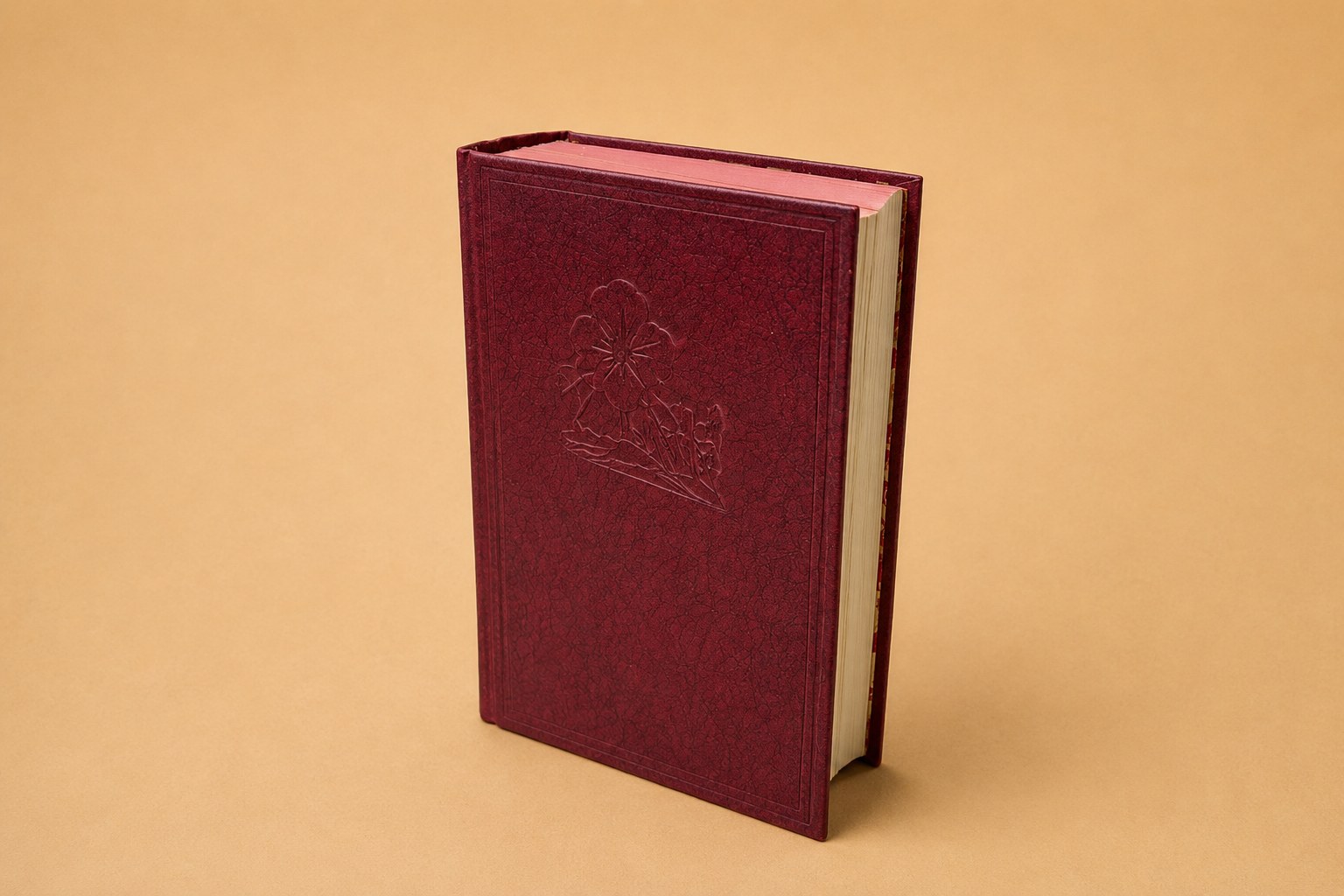
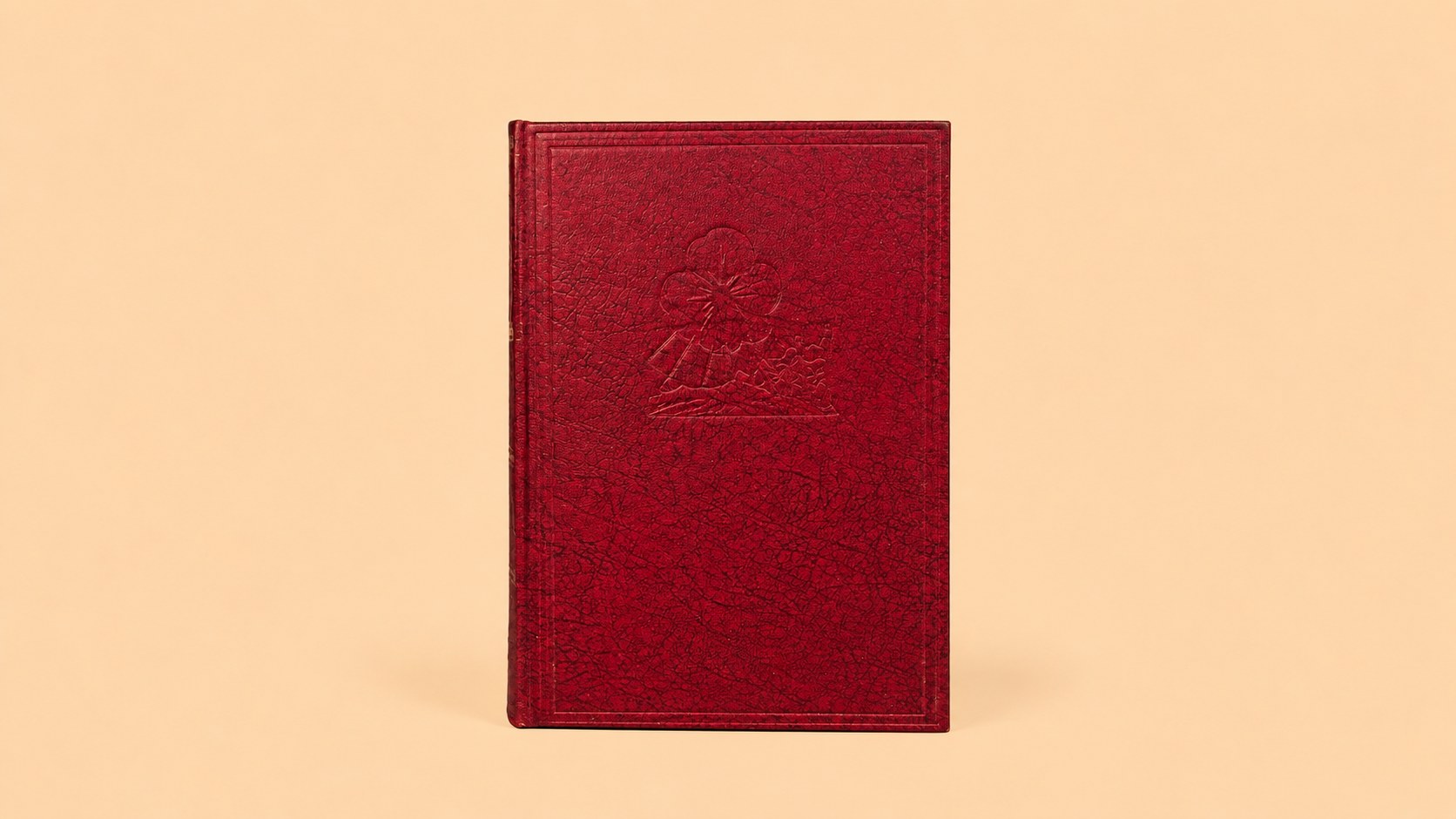
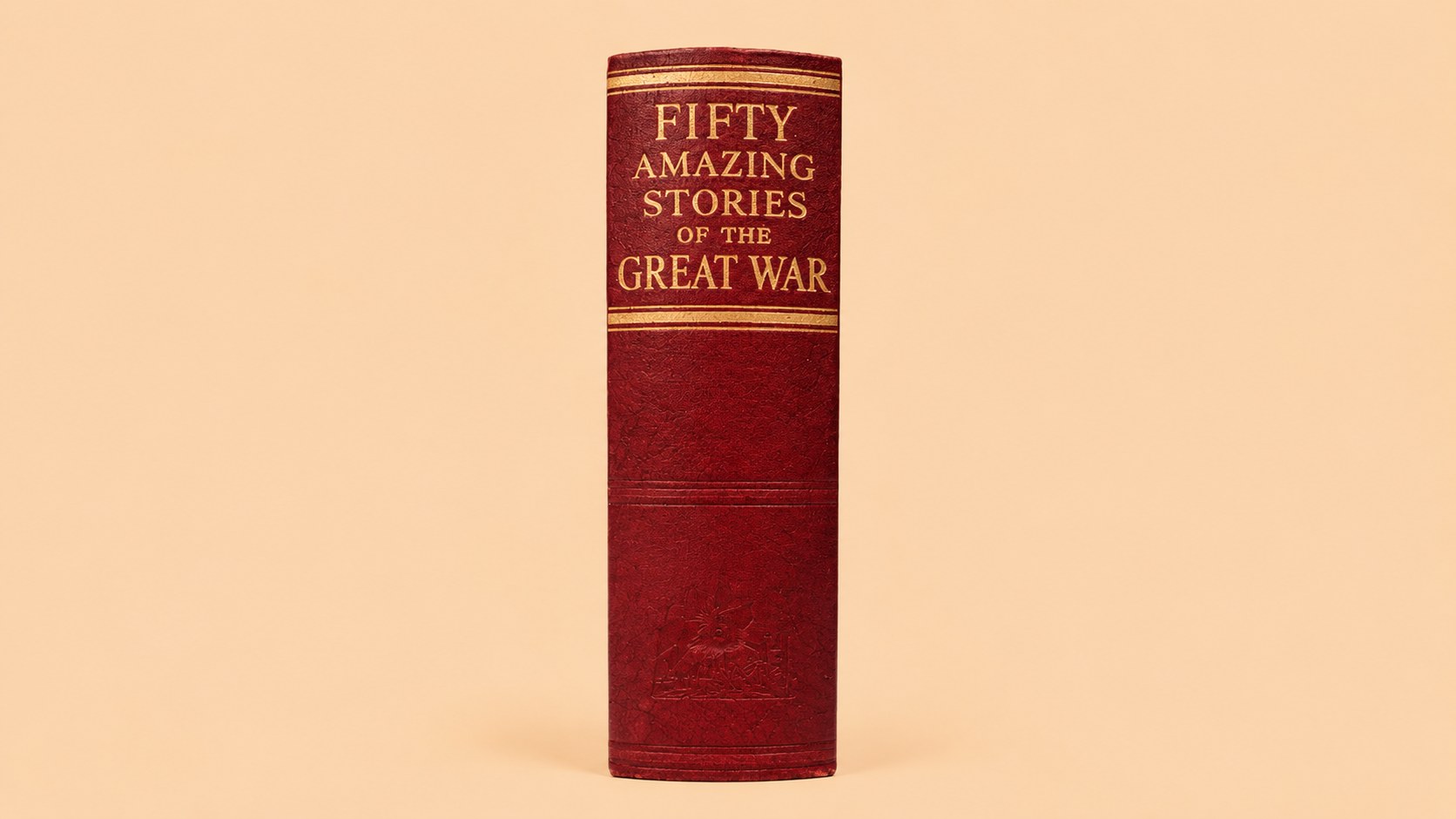
This is a thick omnibus volume of 767 illustrated pages in the characteristic dress of the Odhams 'Fifty' series: limp, slightly padded covers of maroon rexine (a coated book-cloth made to imitate leather), with the title in gilt across the spine and a gilt- and blind-embossed figure on the front board. Books in this series were designed to look like a shelf of leather-bound classics at a fraction of the cost — substantial, decorative, and cheap enough to buy on a subscription instalment.
The Odhams 'Fifty' series was a run of large anthology 'omnibus volumes', each collecting around fifty stories on a theme, published from their works at Long Acre, London WC2 and printed by the Greycaine Book Manufacturing Co. The majority appeared between about 1936 and 1938. They were sold largely by subscription and direct mail — collectors today still turn up the stiff postal boxes they were delivered in — and their plain paper dust jackets, marked simply Omnibus Volume and priced 7/6, are now scarce. Companion titles in the collection include the Wild West and Stranger Than Fiction omnibuses; the wider series ran to Fifty Great Sea Stories, Fifty Amazing Secret Service Dramas, Fifty Amazing Hairbreadth Escapes and many more.
The fifty pieces cover the war from every front and service — army, navy and the new Royal Flying Corps — and lean heavily on writers who had actually been there. Contributors include the VC-winning soldier-author A. O. Pollard, Compton Mackenzie, the war correspondent Sir Philip Gibbs, the novelist Francis Brett Young, Guy Chapman, Philip Gosse, and — most famously — Bruce Bairnsfather, creator of the immortal trench cartoon character 'Old Bill'. The mix of memoir, reportage and lightly fictionalised experience is exactly the register in which the 1930s public consumed the war.
The book is in good condition: the flexible maroon binding sound, the gilt bright, the text-block complete, with the wear to the spine ends and corners normal for a heavy volume of this age and construction. As with most of the series it carries no dated title page, the 1936 publication being established bibliographically rather than from the book itself.
This is popular memory as a physical object. By 1936 the Great War had passed from lived emergency into something Britain told itself in stories, and Odhams — a mass-market publisher of newspapers and part-works — was perfectly placed to sell that memory back to the public, fifty tales at a time, in a binding that flattered the buyer's shelf. It belongs with the collection's other interwar printed objects as evidence of how a whole society read, remembered, and could afford to own its own recent history.
Provenance
Publisher: Odhams Press Ltd, Long Acre, London WC2 (printed in Great Britain by the Greycaine Book Manufacturing Co.). One of three Odhams 'Fifty' omnibus volumes in the collection, all acquired together in February 2026 as part of a larger group of books. Interior not yet examined for ownership inscriptions. Acquisition cost in the Ledger.
England South
Forty years of sketch-books opened in the year England needed them most: the first volume of Sydney R. Jones's illustrated journey through the southern counties, from London to the very end of Cornwall (1948).
England West
The trilogy's longest journey: Thames to Hadrian's Wall through Cotswold wool churches, Shakespeare country, the Marches, and the industrial North. The richest of the three volumes in architectural range (1950).
England East
The farewell volume: Jones closes his life's work with a journey from the Thames to the Scottish border, saluting Durham coalminers alongside Northumbrian castles, under an epigraph about ashes and graves (1954).