Optics & Photography
Coronet Ambassador
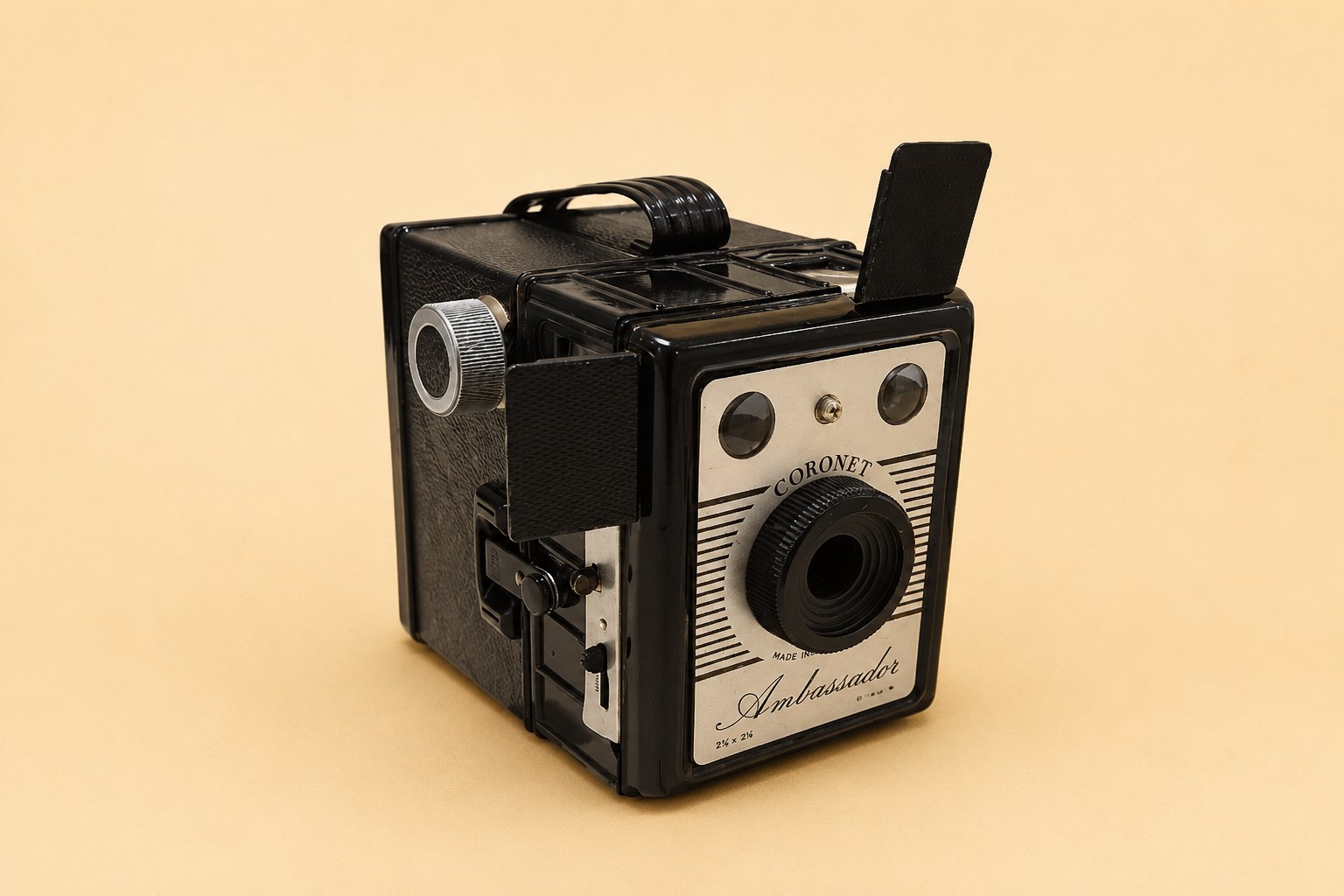
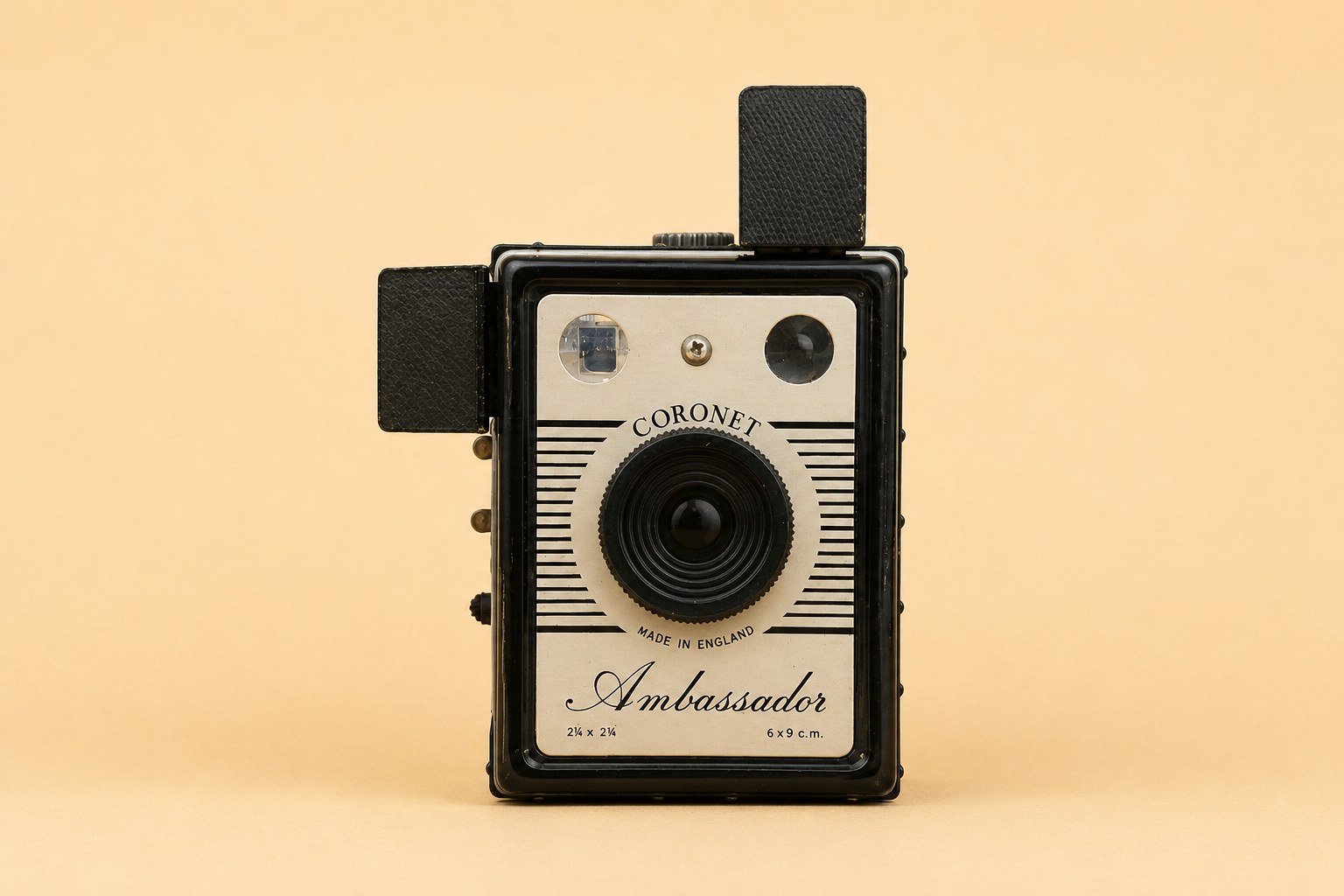
A British 1950s box camera by Coronet of Birmingham — 6×9 on 120 film, with Coro-Flash sync — complete, fully working, and with its original instruction booklet.
A Private Archive of Antiques & Historical Objects
Optics & Photography
A British 1950s box camera by Coronet of Birmingham — 6×9 on 120 film, with Coro-Flash sync — complete, fully working, and with its original instruction booklet.
The British answer to the box camera — and, as it happens, from the very same four-item lot as the collection's German Agfa Synchro-Box. Where the Agfa is Munich sheet-metal, the Coronet Ambassador is Birmingham Bakelite: two cheap, cheerful, near-contemporary machines built to do the same simple thing — let an ordinary family take a picture.
The Ambassador is a classic 1950s box camera: a ribbed Bakelite front carrying a bright, decorative metal face-plate, on a sheet-metal body, with two “brilliant” reflecting finders under hinged chrome covers (one for landscape, one for portrait). It has a fixed-focus meniscus lens and a shutter with just two settings — instant and time (the time setting working, in practice, like a bulb, held open as long as the lever is pressed) — plus a colour-filter slide for skies. It exposes eight 6×9 cm (2¼ × 3¼ in) frames on a roll of 120 film. On the base, a red label urges the owner to buy the “Coro-Flash” gun “for day or night indoor flash snapshots,” and the front carries the Coro-Flash contact sockets — Coronet's own flash system.
The Coronet Camera Company was founded in 1926 at 48 Great Hampton Street, Aston, Birmingham, and became one of Britain's best-known makers of inexpensive cameras — most famously the little Coronet Midget of the 1930s, and a long line of 1950s box and Bakelite models like this one. Coronet was to the British snapshot roughly what Agfa's box was to the German: the cheapest way into photography, sold by the hundred thousand.
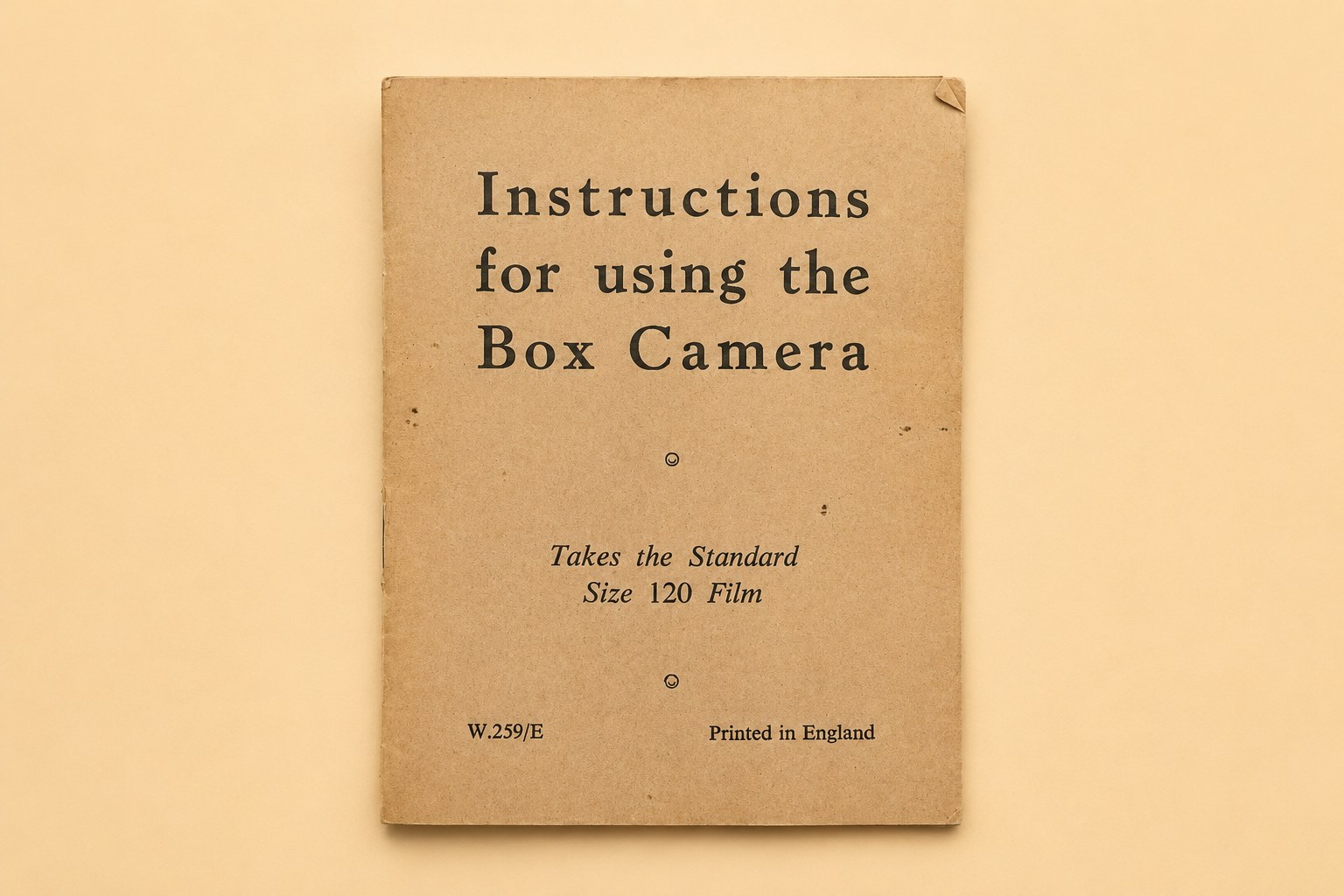
By the mid-1950s the box camera was in its last flowering — the simplest possible photographic tool, on the eve of the 35 mm and Instamatic era that would sweep it away. The Ambassador's booklet catches the whole spirit of it: an exposure table for “well-lit room near a window,” advice for photographing “inside buildings, churches,” and, at the back, an advertisement for the Coro-Flash “for Christmas and Birthday Parties and all other Occasions.” This is the same democratic moment the collection's Ross Ensign Ful-Vue Super and the Camera and the Album narrative describe — photography as something anyone could simply do.
Complete and in full working order: every function operates — the finders, the filter slide, and both shutter settings (instant and time). The Bakelite front, chrome plate and hinged finder-covers are sound, and it carries a serial number, H 62317, on the base. Crucially it keeps its original instruction booklet (Instructions for using the Box Camera, Coronet W.259/E, printed in England), complete with its diagrams and the Coro-Flash advertisement — the ephemeral paper that almost never survives with these cheap cameras.
Modest in value but satisfying as an object: a complete, functioning example of the British box camera at its 1950s peak, from Birmingham's leading maker, with its fragile manual intact. Its real charm in this collection is as a pair — set beside the German Agfa Synchro-Box from the same lot, it makes a neat two-nation snapshot of the same idea, the point-and-press box, on either side of the Channel, in the last decade before the snapshot went automatic.
Provenance
Acquired 11 February 2026 as one of the same four-item lot (£56.64 total; ~£14.16 allocated to this camera) that also supplied the Agfa Synchro-Box. Serial number 'H 62317' on the base label. All functions working. Complete with its original instruction booklet.
Ensign Ful-Vue Super Camera
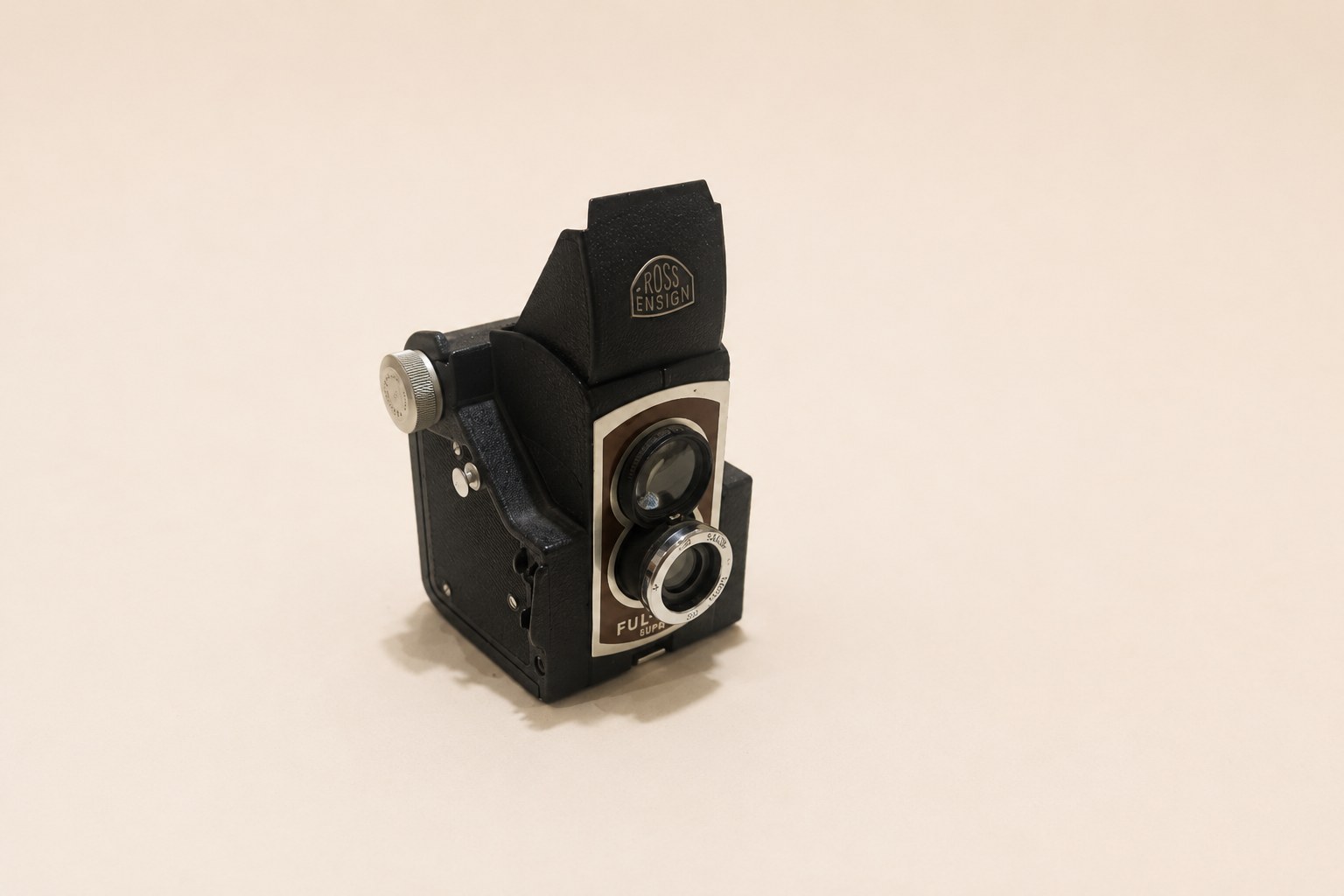
The camera that taught Britain to look down, not through: a 1954 Ross Ensign pseudo-TLR with a glowing waist-level finder, one shutter speed, and a lineage reaching back to Daguerre's London licence of 1839.
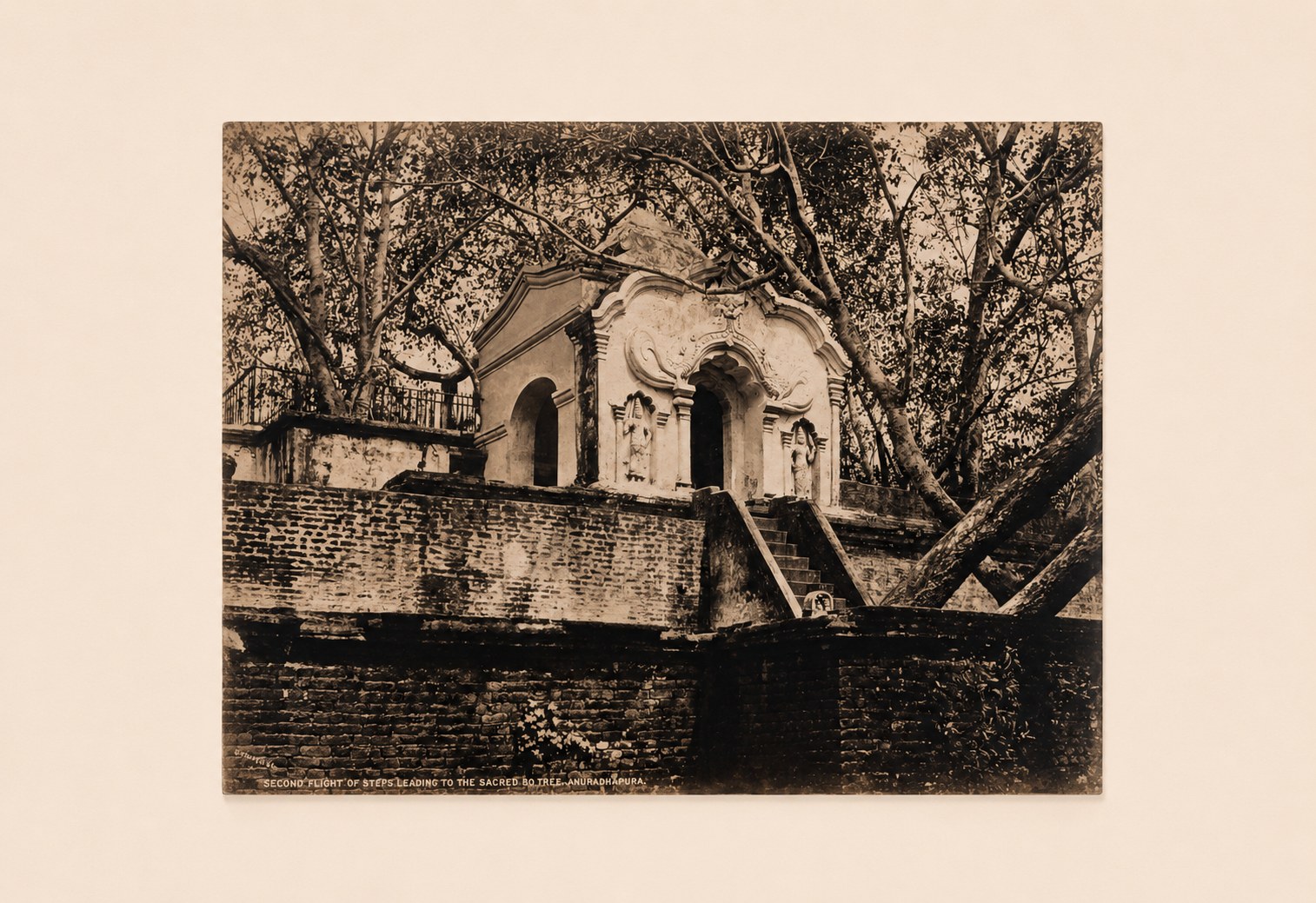
Sacred Bo Tree, Anuradhapura
A Scowen & Co. albumen view of the terraced steps to the Sacred Bo Tree at Anuradhapura — the oldest human-planted tree on earth with a recorded planting date.
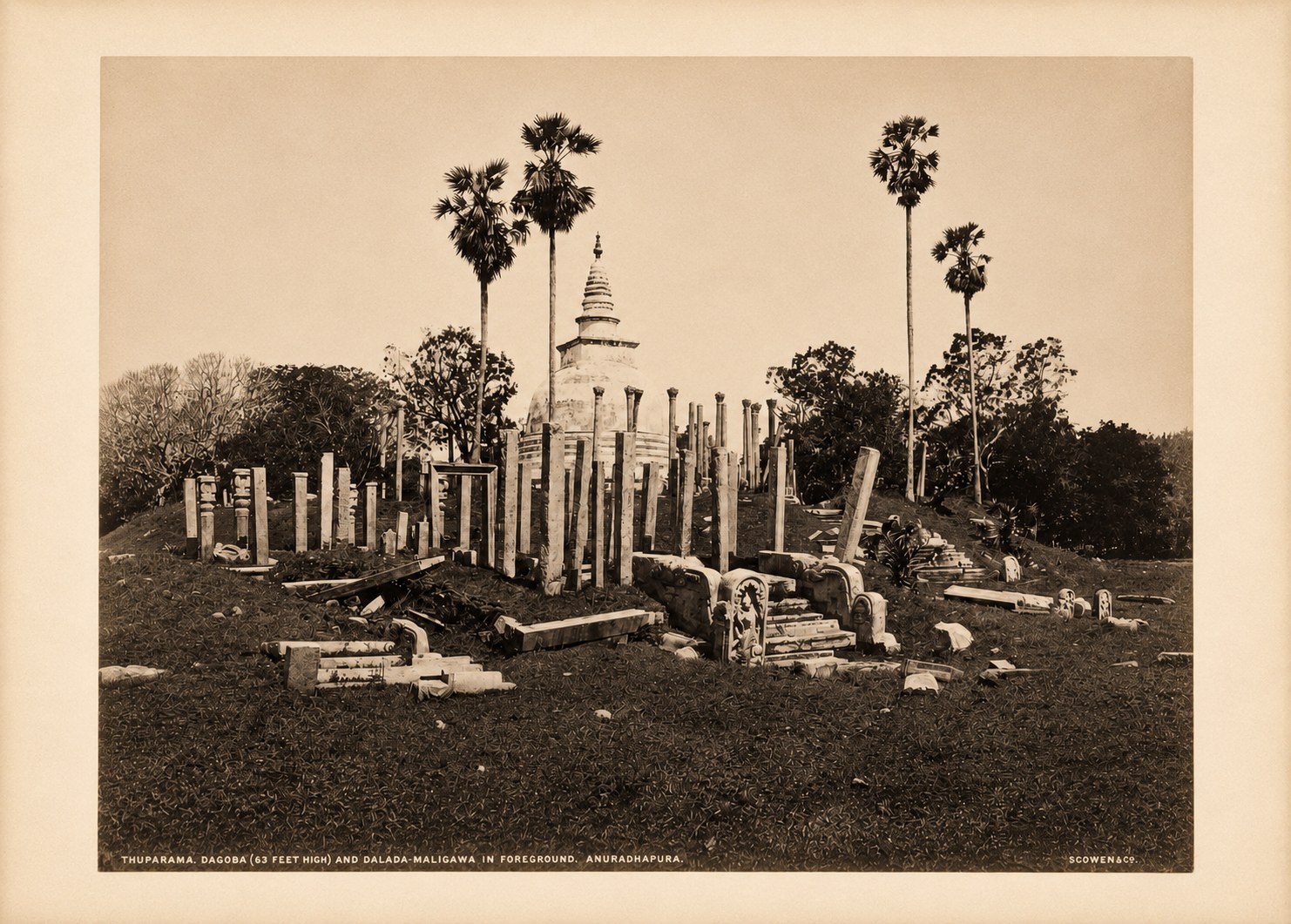
Thuparama Dagoba & Dalada Maligawa, Anuradhapura
Scowen & Co.'s albumen view of Thuparama — the first stupa built in Sri Lanka — ringed by the leaning pillars of its ancient relic-house and a lost Temple of the Tooth.