Books & Literature
The Wounded Name
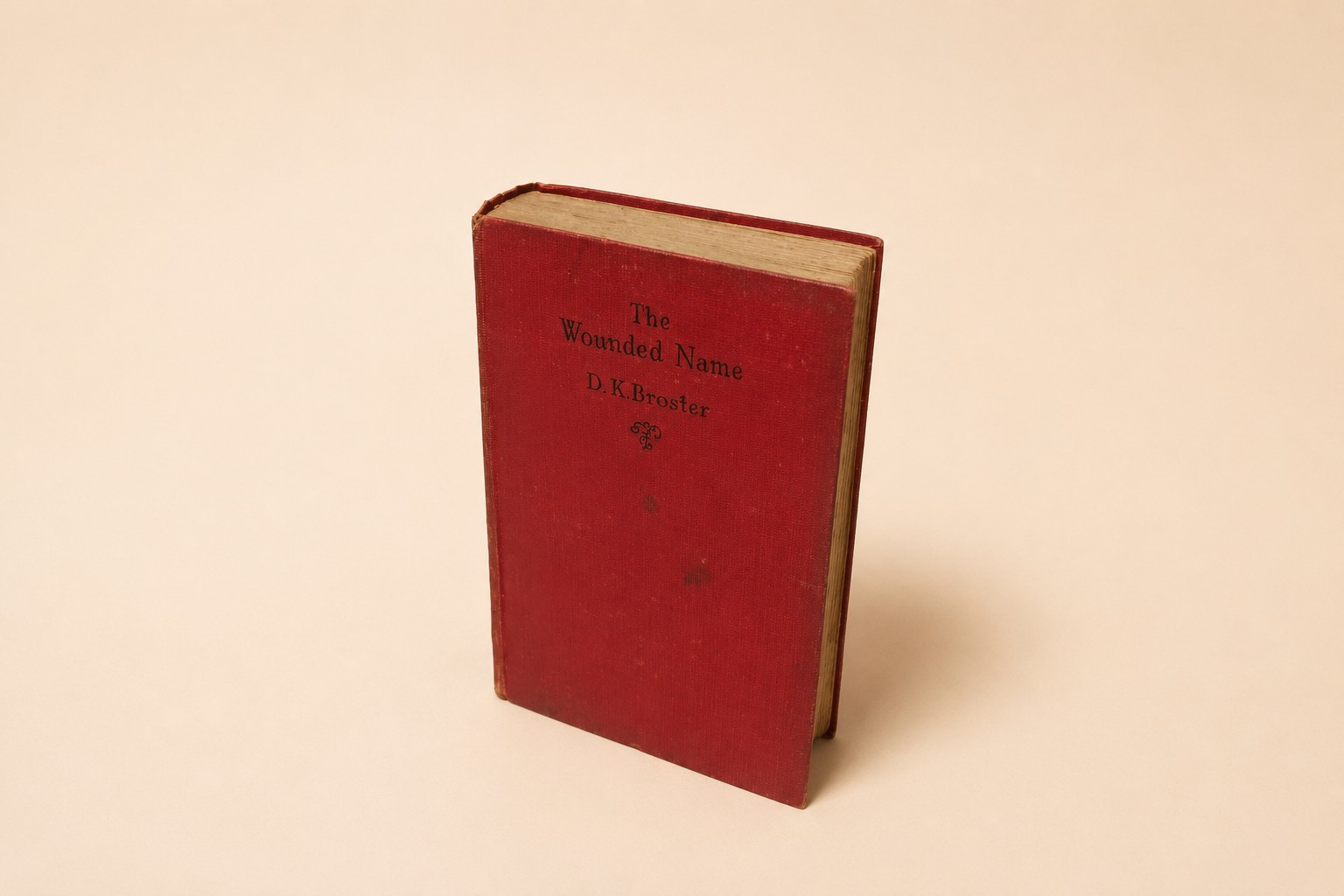
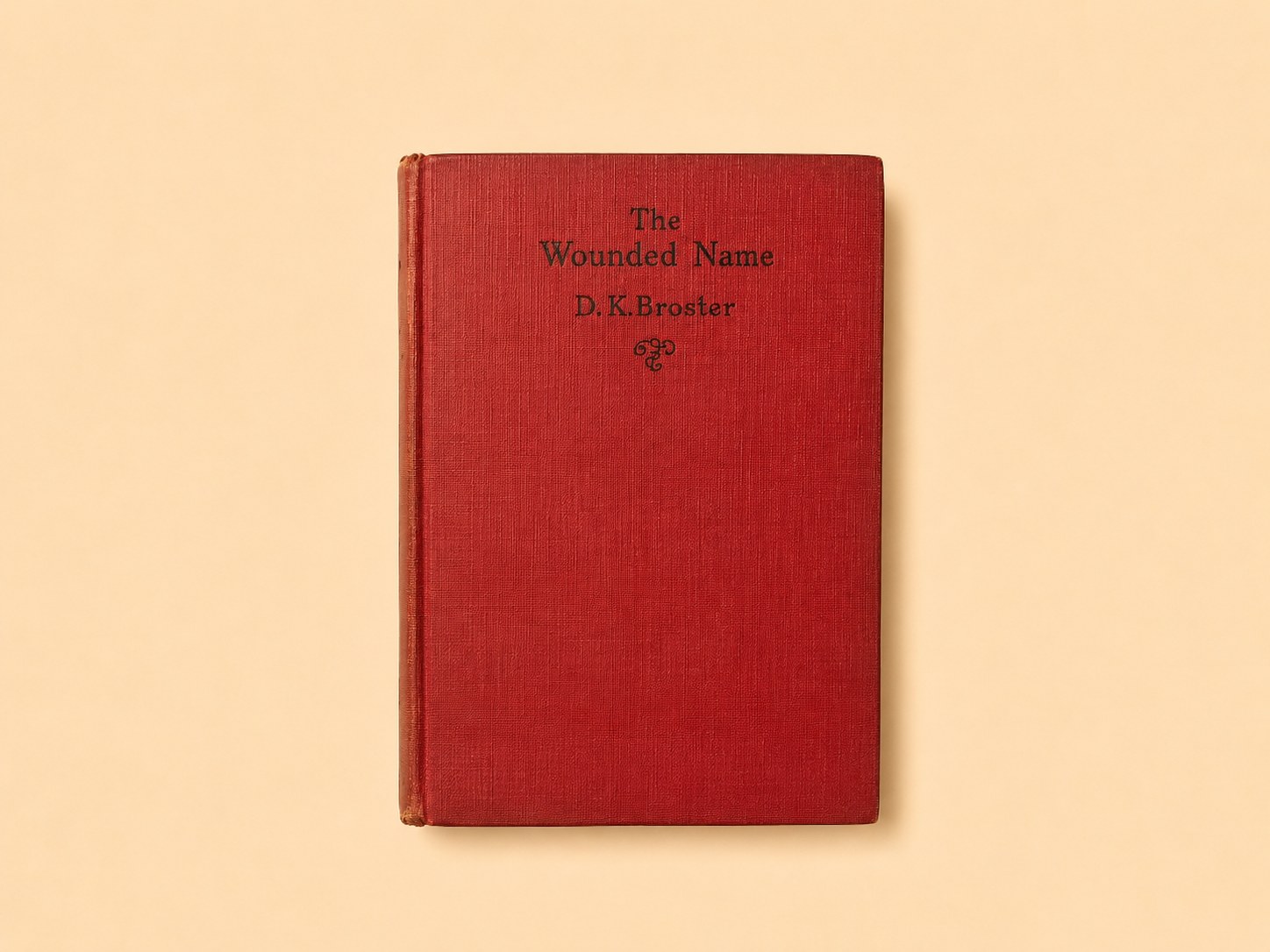
Dedicated 'to friendship' and titled from Hamlet's dying words: Broster's 1815-set novel of a hero falsely disgraced, here in two Heinemann impressions (1926–27 and 1928–29) from the Windmill Press.

A Private Archive of Antiques & Historical Objects
Books & Literature
Dedicated 'to friendship' and titled from Hamlet's dying words: Broster's 1815-set novel of a hero falsely disgraced, here in two Heinemann impressions (1926–27 and 1928–29) from the Windmill Press.
The dedication is two words of Latin: AD AMICITIAM, "to friendship." No name, no explanation. Then comes the title's source, Hamlet dying in Horatio's arms: "O good Horatio, what a wounded name, / Things standing thus unknown, shall live behind me!" A book dedicated to friendship itself, titled from a dying man's fear that his reputation will outlive the truth. Everything D. K. Broster cared about as a novelist is on these two pages before the story even starts.
The Wounded Name was first published by John Murray (the Albemarle Street house of Byron and Darwin) in October 1922, and later transferred to William Heinemann, who reprinted it alongside Broster's famous Jacobite novels. This collection holds two Heinemann copies of different impressions: one recording impressions of 1926 and 1927 at 3s. 6d., the other of 1928 and 1929 at 7s. 6d. The pair make a tidy bibliographic study: between them, the "By the Same Author" lists silently update as Broster's career advances, the later copy adding "Midwinter" (1923). Both were printed at The Windmill Press, Kingswood, Surrey, Heinemann's own printing works, opened in 1921 and named for the firm's windmill device.
The novel runs to over 360 pages in ten chapters, whose titles trace its emotional arc from Running Water and "Roses, Roses All the Way" (Browning's doomed patriot) down through In the Dust and The Captive Hawk, ending at "Sans Tache", the heraldic boast of a knight whose honour is without stain.
Dorothy Kathleen Broster (1877–1950), Oxford-trained historian, decade-long assistant to the Regius Professor of History, and Red Cross nurse in wartime France, wrote this three years before The Flight of the Heron made her famous, and it is the clearest early statement of her lifelong subject: male friendship tested past breaking point, honour falsely destroyed, loyalty that persists against evidence. The second epigraph, from the Irish poet Herbert Trench, asks how one finds "that friend of the rare friends, the deep-hearted", and answers that only catastrophe reveals him.
The novel is set in France in 1815, during the Hundred Days (Napoleon's escape from Elba and last gamble) among the Royalists of the west. Its hero, Aymar de la Rocheterie, called L'Oiseleur (the Fowler), is a legendary young Royalist leader; the narrator-figure, half-English Laurent de Courtomer, meets his hero and then finds him again as a prisoner: wounded, disgraced, found tied to a tree under an accusation of treason, with a botched execution behind him. The rest of the book is the slow forensic and emotional work of clearing a wounded name. Written by a woman who had nursed broken men in France only a few years earlier, its preoccupation with public disgrace and private fidelity reads as anything but academic.
Both copies are in good condition, without inscriptions. Held together, they document a publishing afterlife: a 1922 John Murray novel successful enough that Heinemann kept it in print at two price points across the decade, first as a cheap 3/6 reprint, later back at the full 7/6, riding the fame of The Flight of the Heron, which by then headed the author's title list.
The Wounded Name is the overture to Broster's great theme. Three years before her Jacobite trilogy, every element is already here: the idolised hero brought low, the friend who refuses to believe the charge, honour as something that can be murdered and resurrected. Modern readers have rediscovered the book precisely for the intensity of its central relationship, and it has become the Broster novel most discussed after the trilogy itself. These two impressions, sitting beside the collection's Flight of the Heron and Gleam in the North, complete a small working archive of one interwar novelist's moral universe in original Heinemann cloth.
Provenance
Two copies, no inscriptions; prior owners unknown. Impressions dated by title versos (1926/1927 at 3/6 and 1928/1929 at 7/6); 'By the Same Author' lists corroborate the sequence.
England South
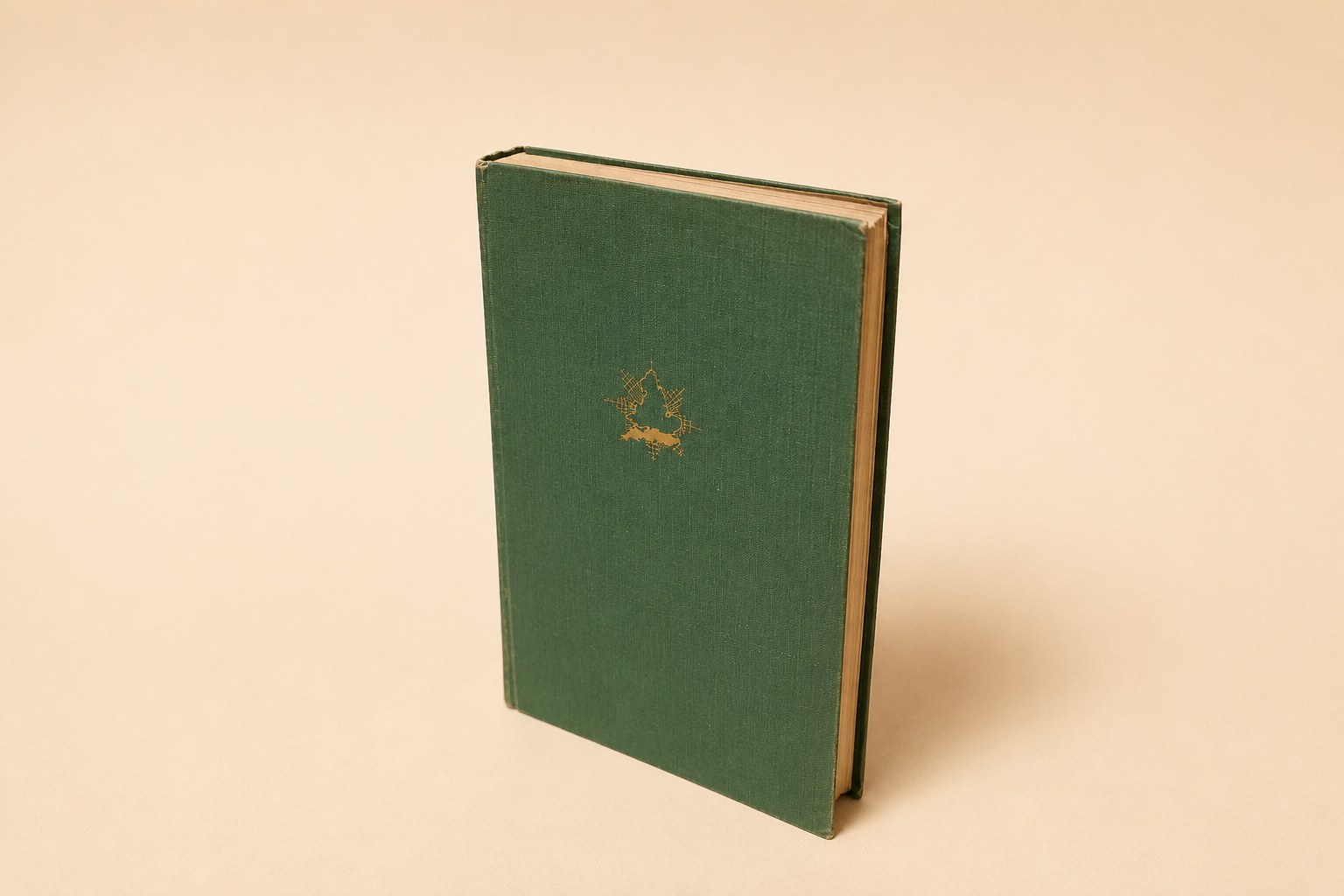
Forty years of sketch-books opened in the year England needed them most: the first volume of Sydney R. Jones's illustrated journey through the southern counties, from London to the very end of Cornwall (1948).
England West
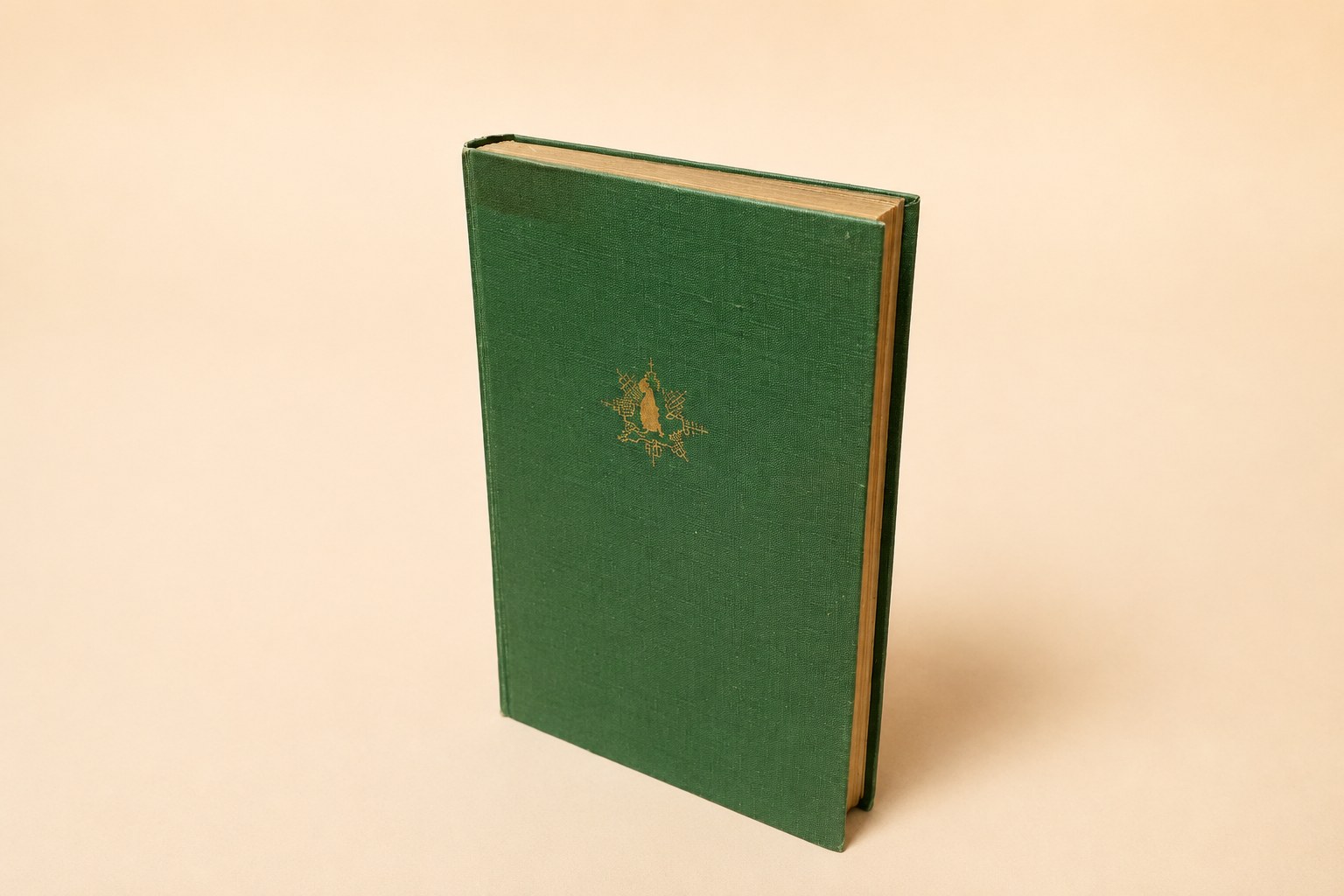
The trilogy's longest journey: Thames to Hadrian's Wall through Cotswold wool churches, Shakespeare country, the Marches, and the industrial North. The richest of the three volumes in architectural range (1950).
England East
The farewell volume: Jones closes his life's work with a journey from the Thames to the Scottish border, saluting Durham coalminers alongside Northumbrian castles, under an epigraph about ashes and graves (1954).