Books & Literature
Songs of Grace and Glory
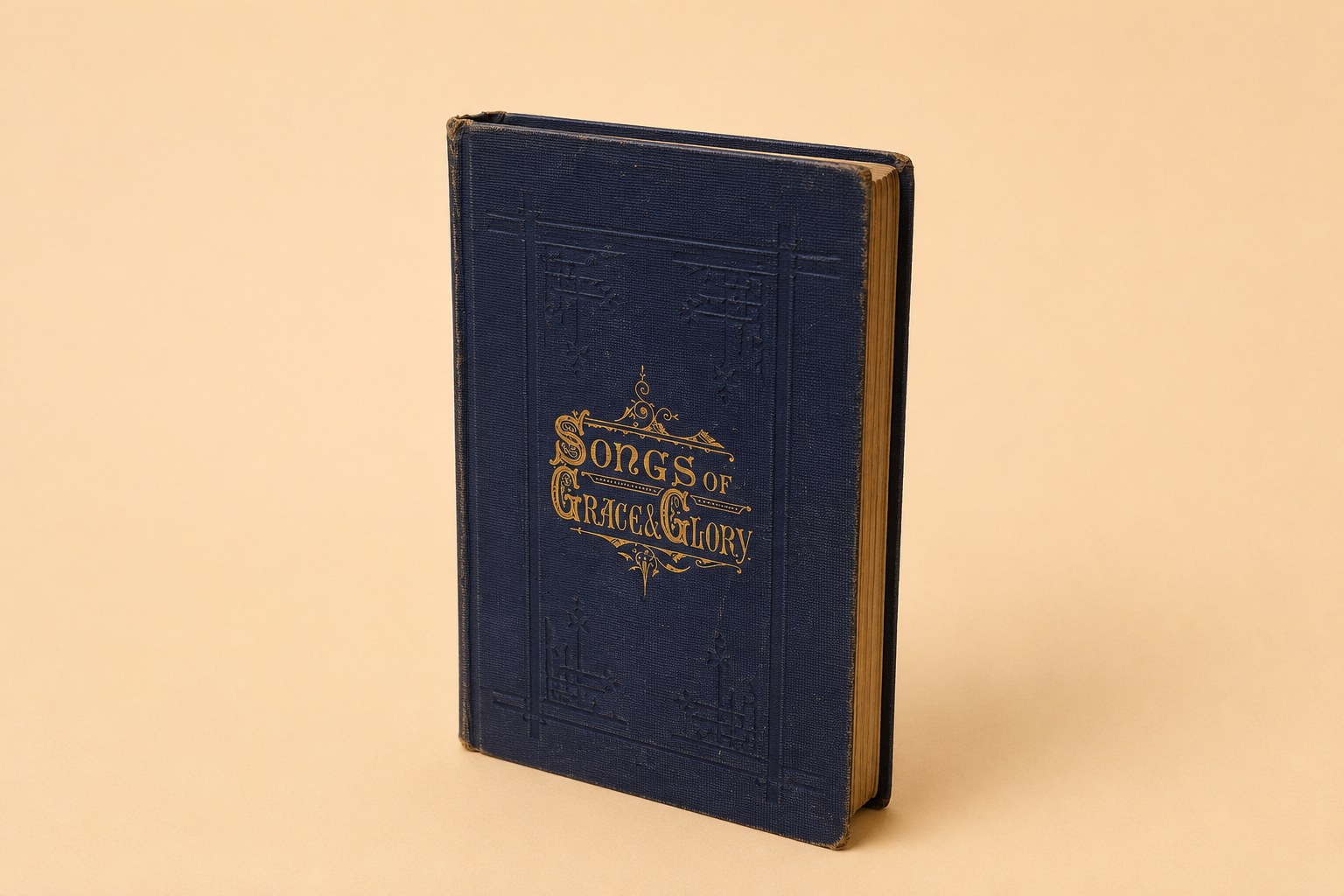
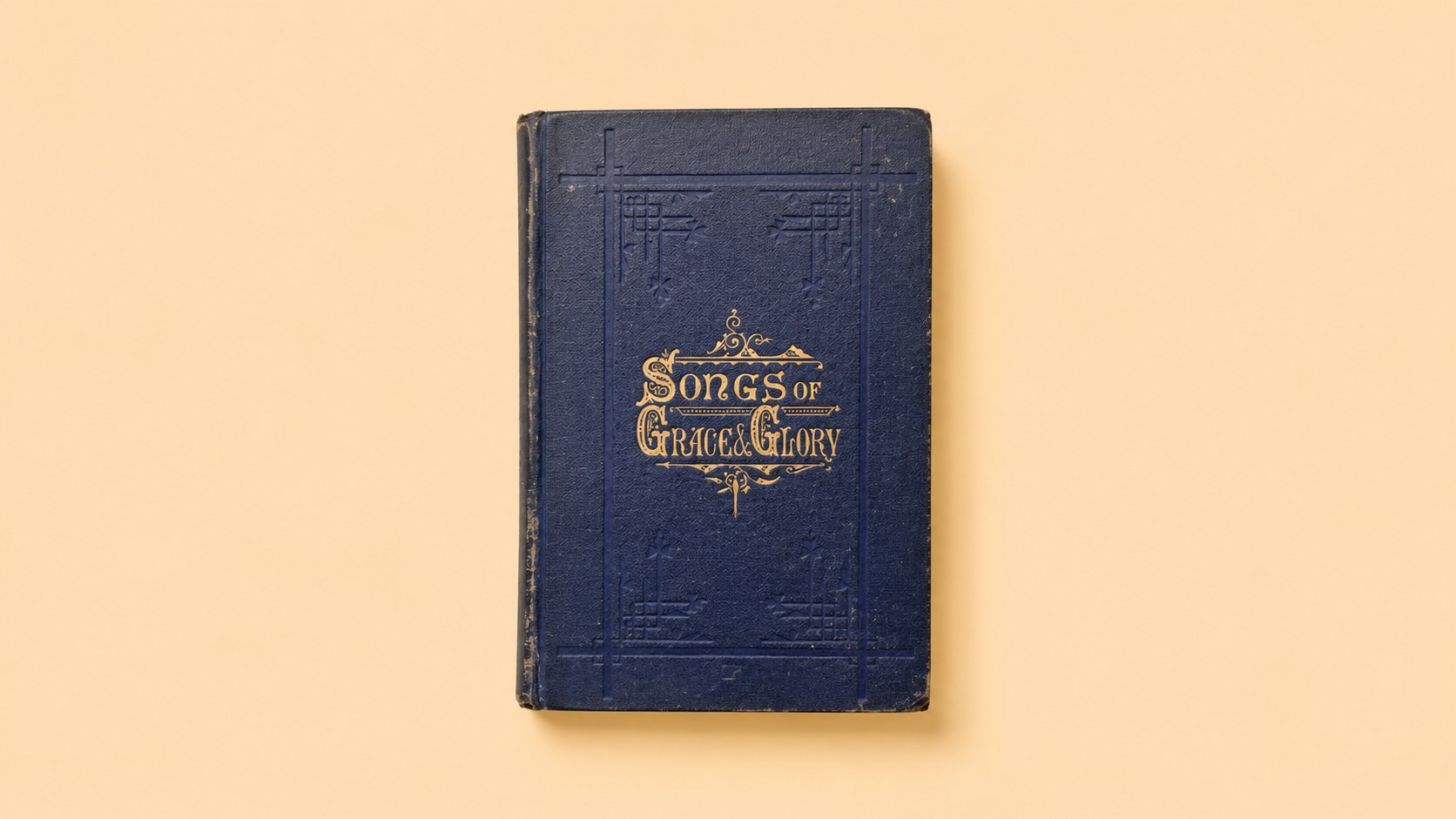
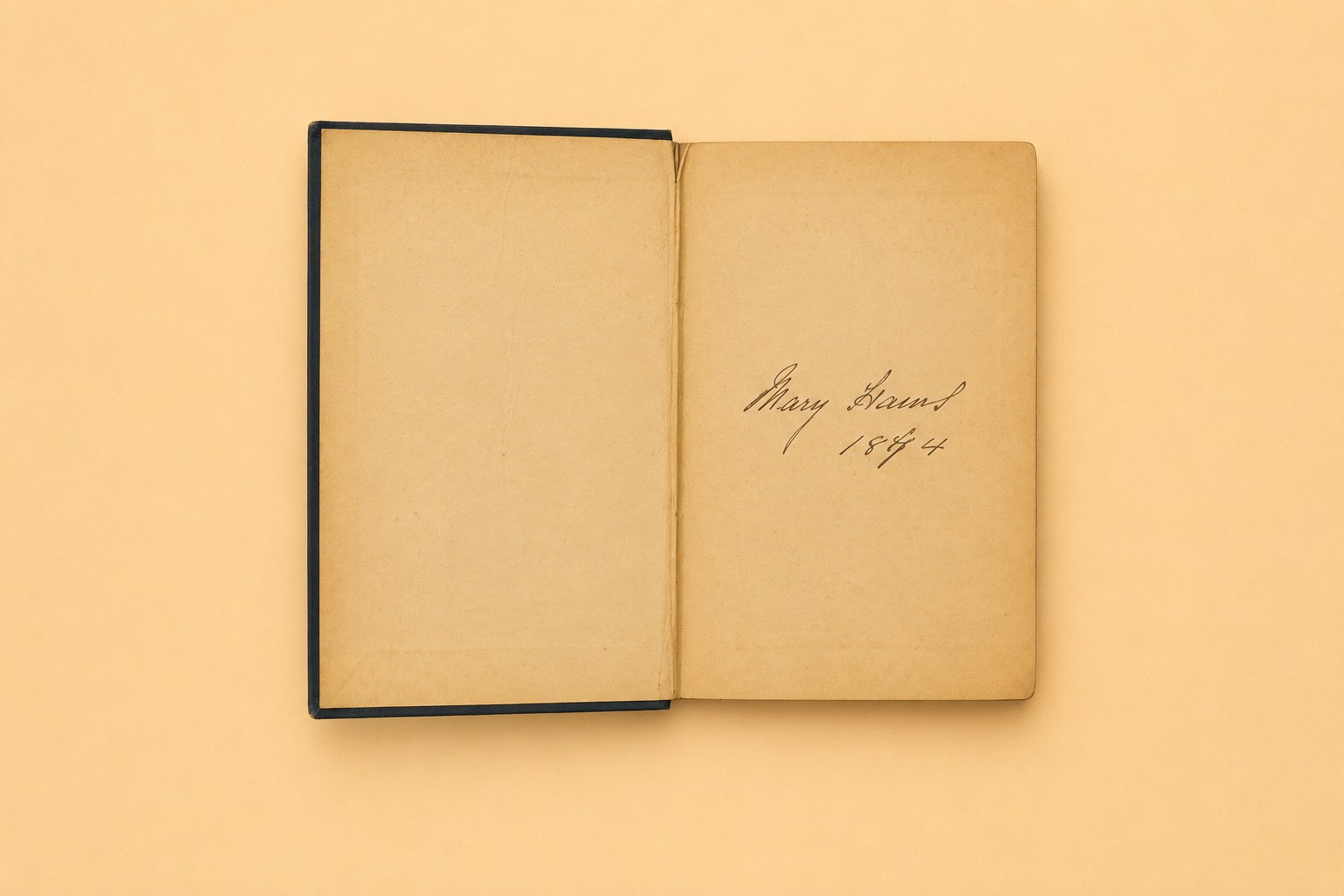
An 1872 Victorian evangelical hymnal of 1,025 hymns, edited by Charles Snepp with music by the famous hymnwriter Frances Ridley Havergal — signed 'Mary Hawes 1874'.

A Private Archive of Antiques & Historical Objects
Books & Literature
An 1872 Victorian evangelical hymnal of 1,025 hymns, edited by Charles Snepp with music by the famous hymnwriter Frances Ridley Havergal — signed 'Mary Hawes 1874'.
This little blue-and-gilt book is a Victorian soul's whole devotional world in one volume. Songs of Grace and Glory gathers over a thousand hymns — “the hymnal treasures of the Church of Christ, from the sixth to the nineteenth century” — and arranges them not alphabetically or by tune but by doctrine, so that a minister or a family could find a hymn for any article of faith. On the flyleaf, in ink, a former owner has written her claim to it: Mary Hawes, 1874.
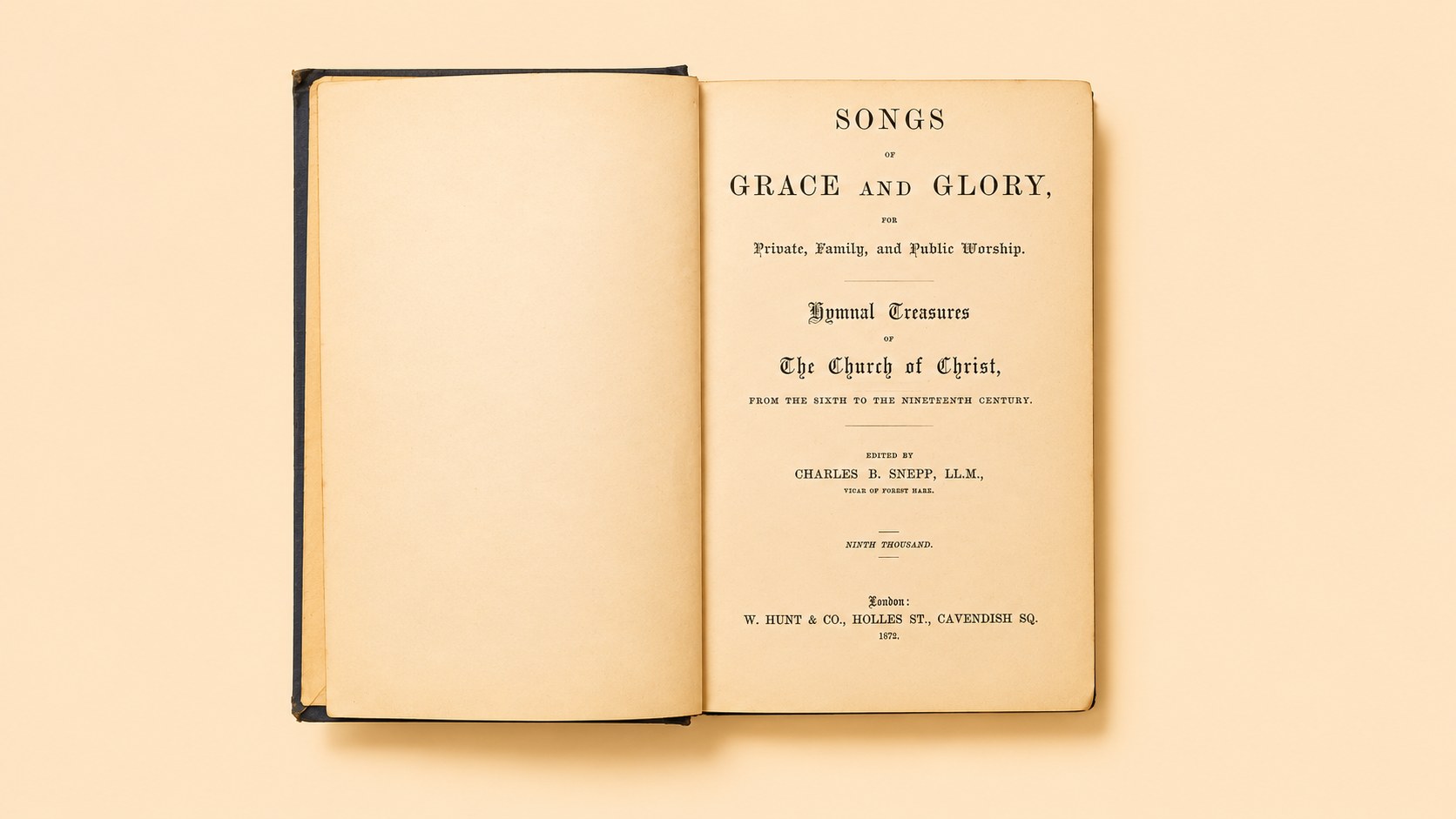
The title page reads Songs of Grace and Glory, for Private, Family, and Public Worship: Hymnal Treasures of the Church of Christ, from the Sixth to the Nineteenth Century, edited by Charles B. Snepp, LL.M., Vicar of Perry Barr, marked Ninth Thousand and published in London by W. Hunt & Co. of Holles Street, Cavendish Square, in 1872; it was printed by Butler & Tanner at their Selwood Works in Frome. It is a small thick octavo in blue cloth, the front board gilt-stamped Songs of Grace & Glory within a blind-ruled frame, the page-edges stained red. The Arrangement of Hymns that opens the book is a marvel of Victorian systematic theology in miniature, marshalling the 1,025 hymns under headings from “The Holy and Ever-Blessed Trinity in Unity” through “The Book of God, and the Church of God” to “The Life and History of a True Believer.”
The compiler was Charles Busbridge Snepp (1823–1880), the evangelical Vicar of Perry Barr near Birmingham, who tells us in his preface that the book was “the result of thirty years' collection.” But the name that gives the volume its lasting interest is on the music side. The companion tune-book, Havergal's Psalmody, was prepared by Frances Ridley Havergal (1836–1879) — one of the most beloved hymnwriters of the century, author of Take My Life and Let It Be, Like a River Glorious and Who Is on the Lord's Side? — drawing on the hymn-tunes of her father, the church musician William Henry Havergal, the “late Canon Havergal” whom Snepp's preface mourns. The hymnal and its psalmody were conceived as a matched pair, words and music, and Havergal's involvement places this otherwise sectarian collection within touching distance of the era's devotional mainstream.
Songs of Grace and Glory is a pure specimen of the high-Victorian evangelical and Calvinistic temper: doctrinally exact, scripture-saturated, and intended equally for “private, family, and public worship” — the three settings in which a Victorian Christian's day was framed. Its careful crediting of every hymn's author and date (helped, the preface notes, by the great hymnologist Daniel Sedgwick) reflects a new nineteenth-century seriousness about hymnody as a subject of scholarship, not just song. To read its contents page is to see exactly how an earnest 1870s congregation organised its beliefs.
The book is in good condition, the blue cloth and gilt still bright and the red edges clean, with the spine ends a little worn and the usual age-foxing. Its individuality lies in the flyleaf signature, Mary Hawes, 1874 — an owner who took up the book within two years of this printing, and whose name (no firmer identification traced) makes it a real object of one person's private worship rather than an anonymous reprint.
Hymnals are among the most-used and least-preserved of Victorian books — thumbed to pieces in pews and then discarded — so a clean early-printing copy is itself a small survival. This one carries genuine hymnological interest through its Havergal music companion, sits squarely in the devotional print culture that shaped Victorian life, and bears a dated owner's name that roots it to a specific believer in 1874. It joins the collection's other witnesses — the Smiles, the anthologies, the Bridges — to how the nineteenth century read, sang, and improved itself.
Provenance
W. Hunt & Co., London, 1872 ('Ninth Thousand'); preface dated November 1871; printed by Butler & Tanner of Frome. Edited by Charles B. Snepp, Vicar of Perry Barr; the companion tune-book ('Havergal's Psalmody') was prepared by the hymnwriter Frances Ridley Havergal. Ink ownership inscription on the front flyleaf: 'Mary Hawes 1874' (unidentified). One of a group of 27 books acquired together in February 2026 (same lot as the Bridges, Coghill, Gordon, Smiles and Cowling volumes); acquisition cost in the Ledger.
England South
Forty years of sketch-books opened in the year England needed them most: the first volume of Sydney R. Jones's illustrated journey through the southern counties, from London to the very end of Cornwall (1948).
England West
The trilogy's longest journey: Thames to Hadrian's Wall through Cotswold wool churches, Shakespeare country, the Marches, and the industrial North. The richest of the three volumes in architectural range (1950).
England East
The farewell volume: Jones closes his life's work with a journey from the Thames to the Scottish border, saluting Durham coalminers alongside Northumbrian castles, under an epigraph about ashes and graves (1954).