Books & Literature
Character
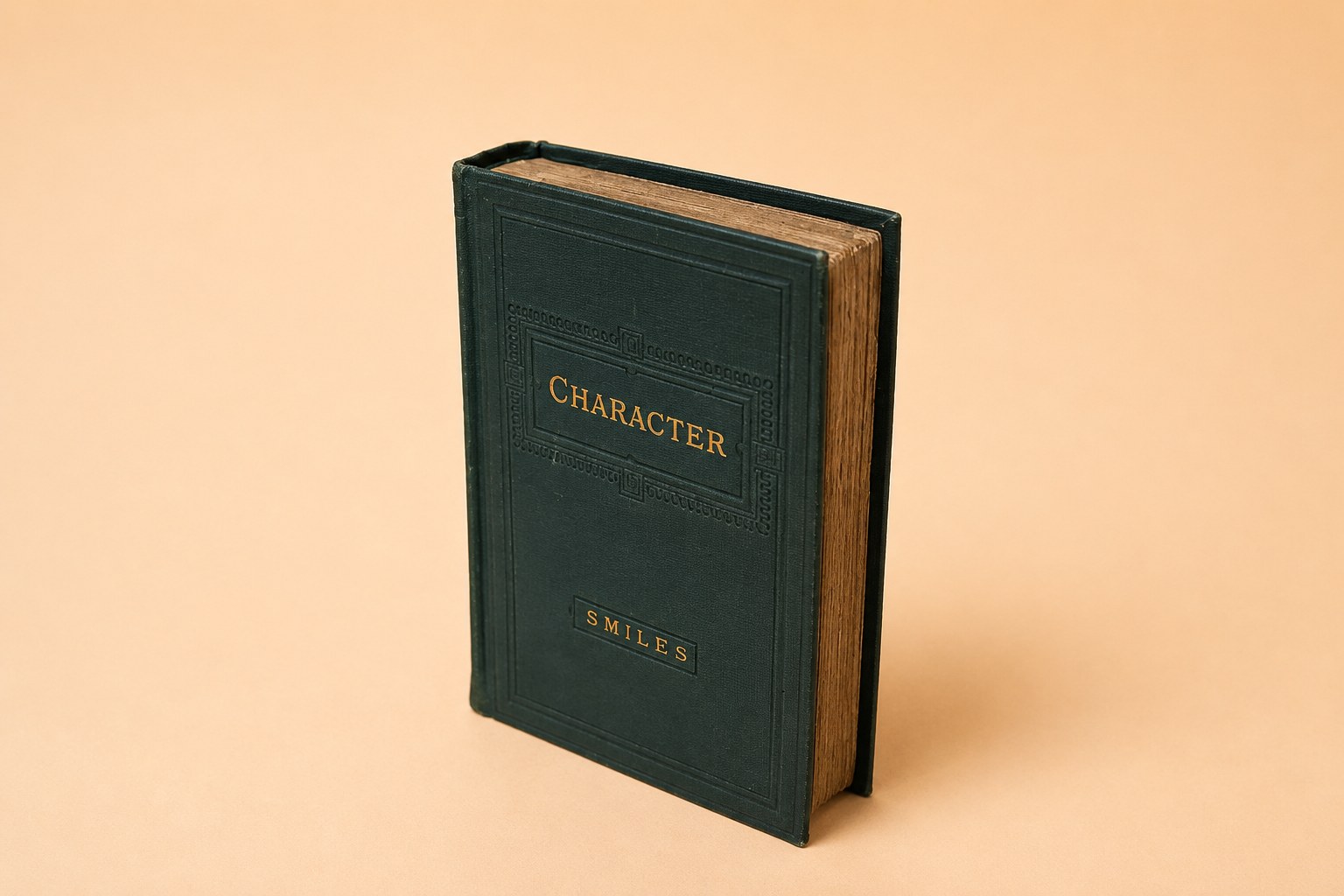
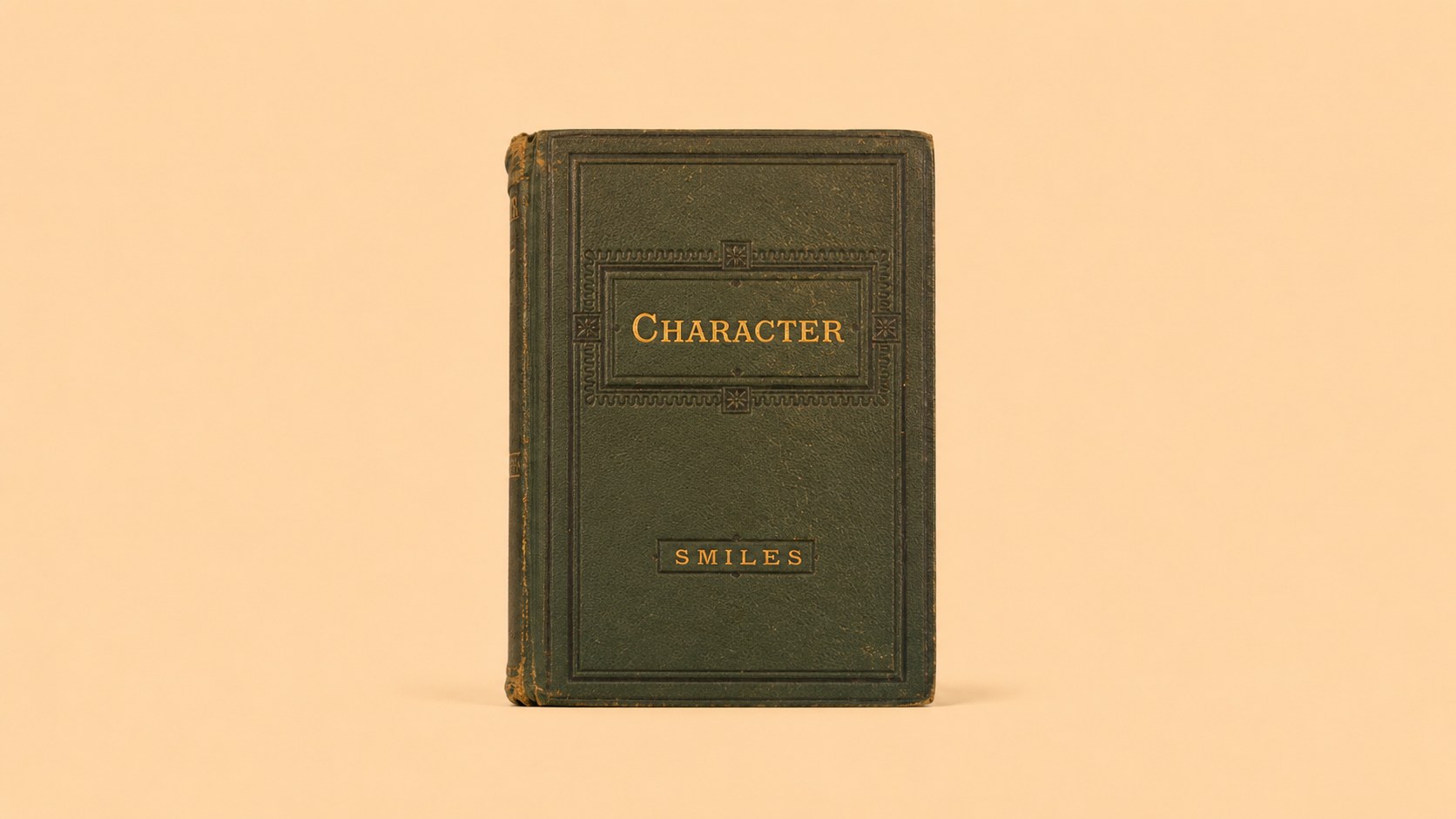
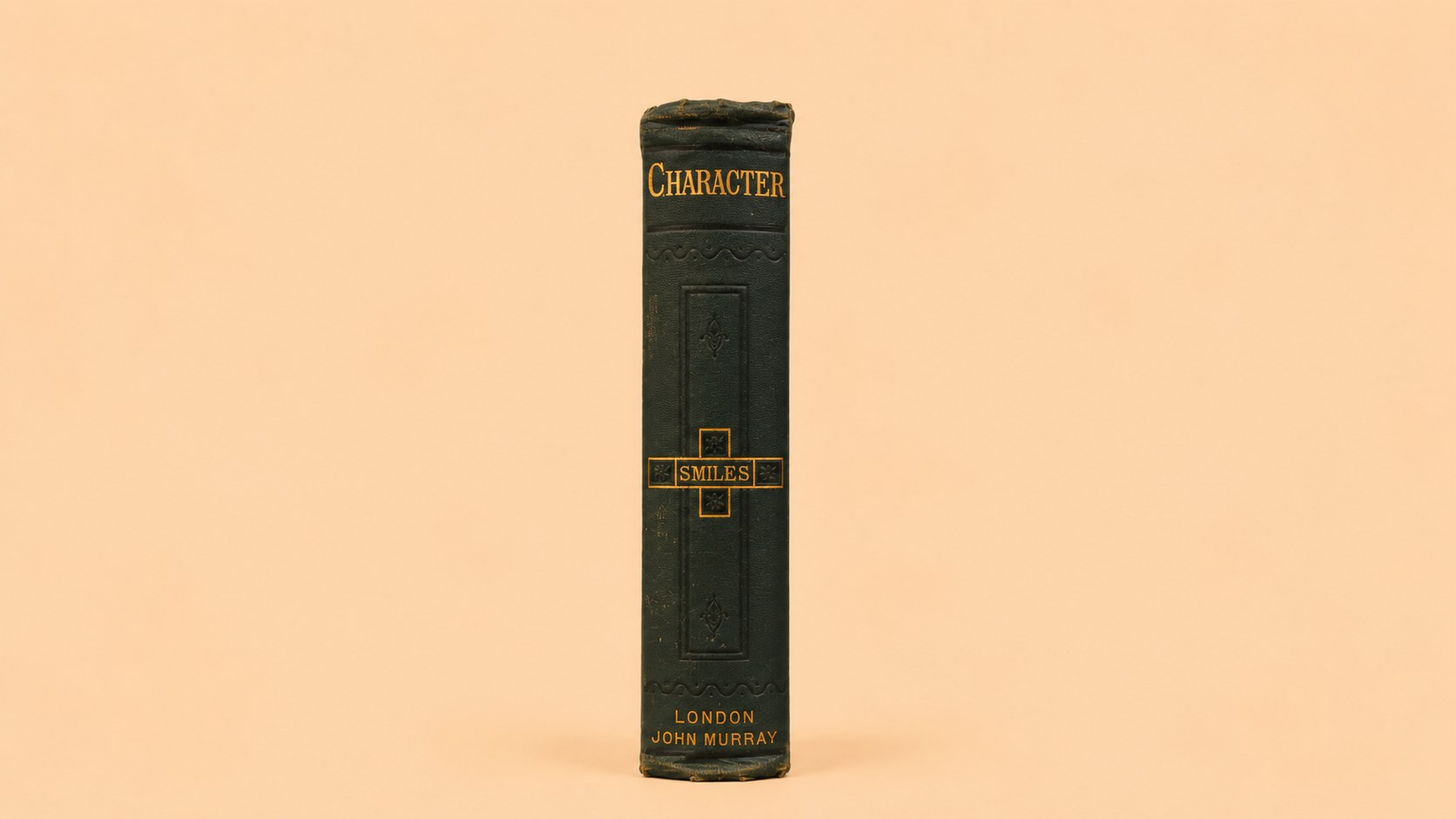
Samuel Smiles's 'Character' (1874 New Edition, John Murray) — the sequel to 'Self-Help' and a cornerstone of the Victorian self-improvement gospel — with a woman's ownership signature.
A Private Archive of Antiques & Historical Objects
Books & Literature
Samuel Smiles's 'Character' (1874 New Edition, John Murray) — the sequel to 'Self-Help' and a cornerstone of the Victorian self-improvement gospel — with a woman's ownership signature.
This modest green volume is a piece of one of the nineteenth century's biggest ideas: that an ordinary person could, by effort and self-discipline, make themselves. Its author, Samuel Smiles, had become a household name with Self-Help in 1859 — the book that effectively founded the modern self-improvement genre — and Character (1871) is its sequel. This copy is the 1874 New Edition, published by John Murray of Albemarle Street, and it still carries the inked name of a Victorian woman who once owned it.
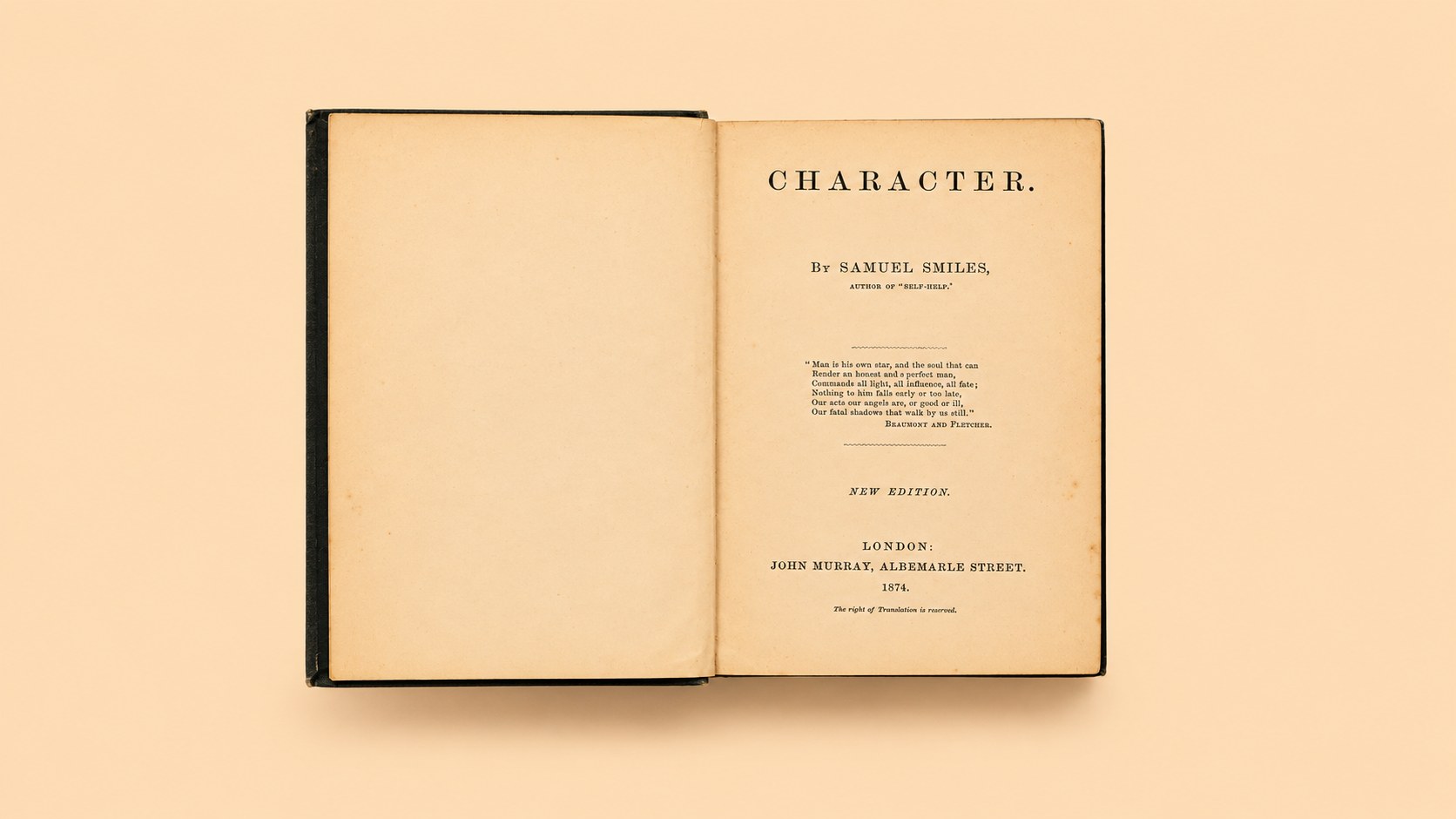
The title page is plain and purposeful: Character, by Samuel Smiles, author of 'Self-Help', with an epigraph from Beaumont and Fletcher — “Man is his own star…” — New Edition, London: John Murray, Albemarle Street, 1874, printed by William Clowes & Sons. It is a small octavo in green cloth, blind-panelled with bevelled boards and gilt-lettered CHARACTER and SMILES on the front and spine. The twelve chapters lay out the Victorian moral curriculum entire: Influence of Character, Home Power, Work, Courage, Self-Control, Duty—Truthfulness, Temper, Manner, Companionship of Books, Companionship in Marriage, The Discipline of Experience.
Samuel Smiles (1812–1904), a Scottish doctor turned reformer, railway secretary and author, wrote the era's defining manuals of self-betterment. Self-Help (1859) preached that hard work, thrift, sobriety and perseverance — not birth or luck — were the engines of a good life, and it sold enormously across the world. Character was the first of the sequels that followed (Thrift, 1875; Duty, 1880; Life and Labour, 1887), and its argument is in the title: that character, built from honesty, duty and self-control, is the true crown of a life and the real foundation of a strong society — worth more, Smiles insists, than either wealth or intellect. That his publisher was John Murray, the firm of Byron, Jane Austen and Darwin's Origin of Species, placed him at the centre of nineteenth-century publishing.
Character is a near-perfect distillation of high-Victorian values, and reading its contents page today is to meet that world's assumptions head on — including its view of women. Two of the longest chapters, Home Power and Companionship in Marriage, are given over to the moral influence of mothers and wives, in the era's characteristic blend of reverence and constraint: woman as “inspirer and purifier,” the home as “the best nursery of character.” It is precisely the creed of earnest self-cultivation that the next century's writers — several of them elsewhere in this collection — would both inherit and rebel against.
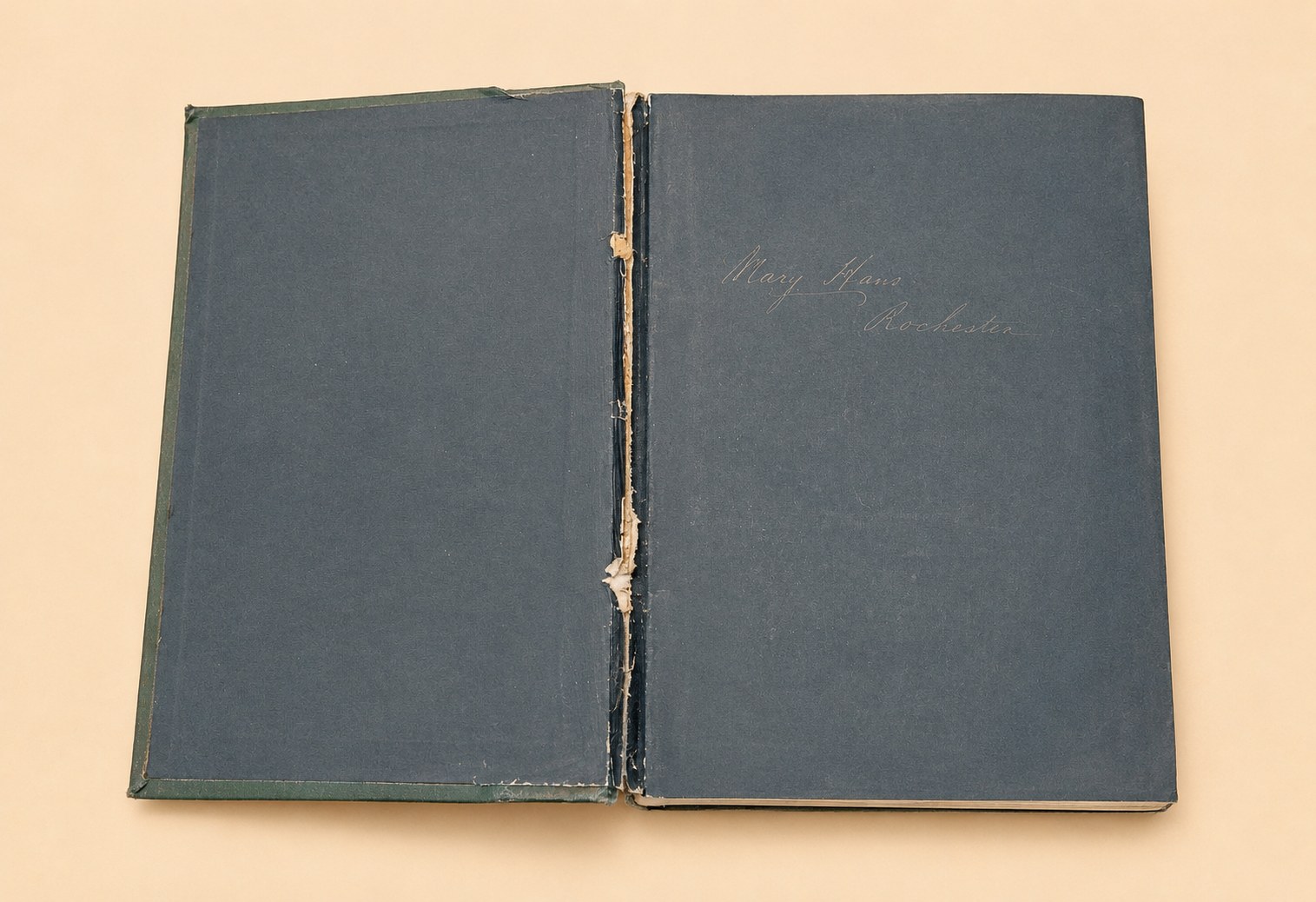
The book is in good condition for its age, the green cloth and gilt still handsome, with the wear honest and expected: the spine ends frayed and a little chipped, the corners bumped, some foxing to the edges. Its individual touch is the ink ownership signature on the front pastedown — a woman's name, Mary Jane followed by a surname that the dark endpaper makes hard to read with confidence. There is a faint pencilled notation, likely an old price, on a preliminary leaf. That a Victorian woman owned and signed this particular book is a quiet pleasure, given how much of it is addressed to her supposed sphere.
Few books capture the moral temper of their age as completely as Smiles's do. Character is the sequel to the work that gave the world the very phrase “self-help,” issued by the most prestigious publisher in London, in the decade when the Victorian gospel of improvement was at its height. As an object it carries that ideology in pocket form — and, with its female owner's signature, a small trace of one real reader inside the world the book describes. It sits naturally among the collection's other witnesses to how the nineteenth and twentieth centuries read, improved, and imagined themselves.
Provenance
John Murray, Albemarle Street, London; title page 'New Edition', dated 1874 ('Character' first published 1871). Printed by William Clowes & Sons. Ink ownership signature on the front pastedown — a woman's name, reading as 'Mary Jane [surname not clearly legible]'; a faint pencil notation (possibly a price) on a preliminary leaf. One of a group of 27 books acquired together in February 2026 (same lot as the Bridges, Coghill and Gordon volumes); acquisition cost in the Ledger.
England South
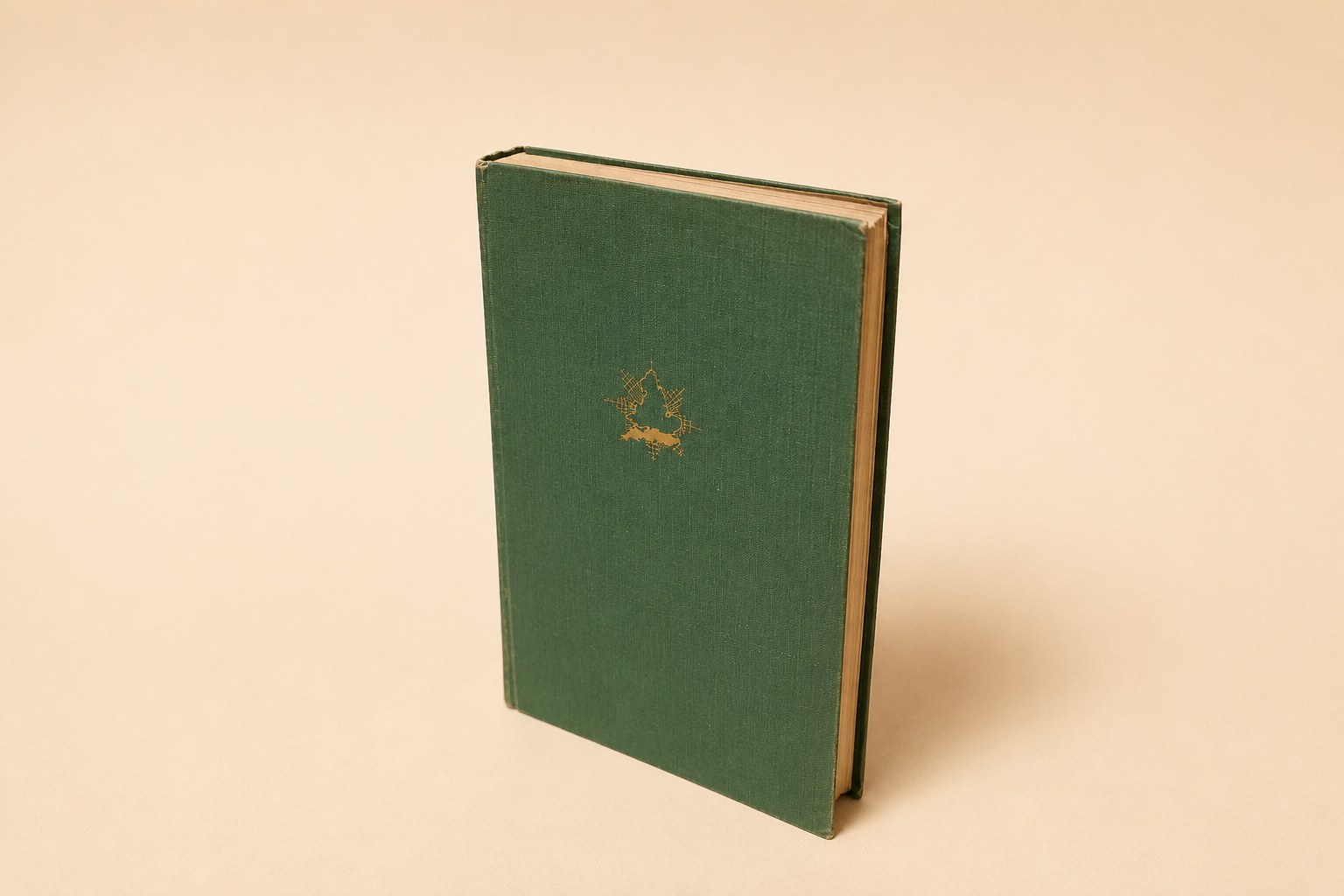
Forty years of sketch-books opened in the year England needed them most: the first volume of Sydney R. Jones's illustrated journey through the southern counties, from London to the very end of Cornwall (1948).
England West
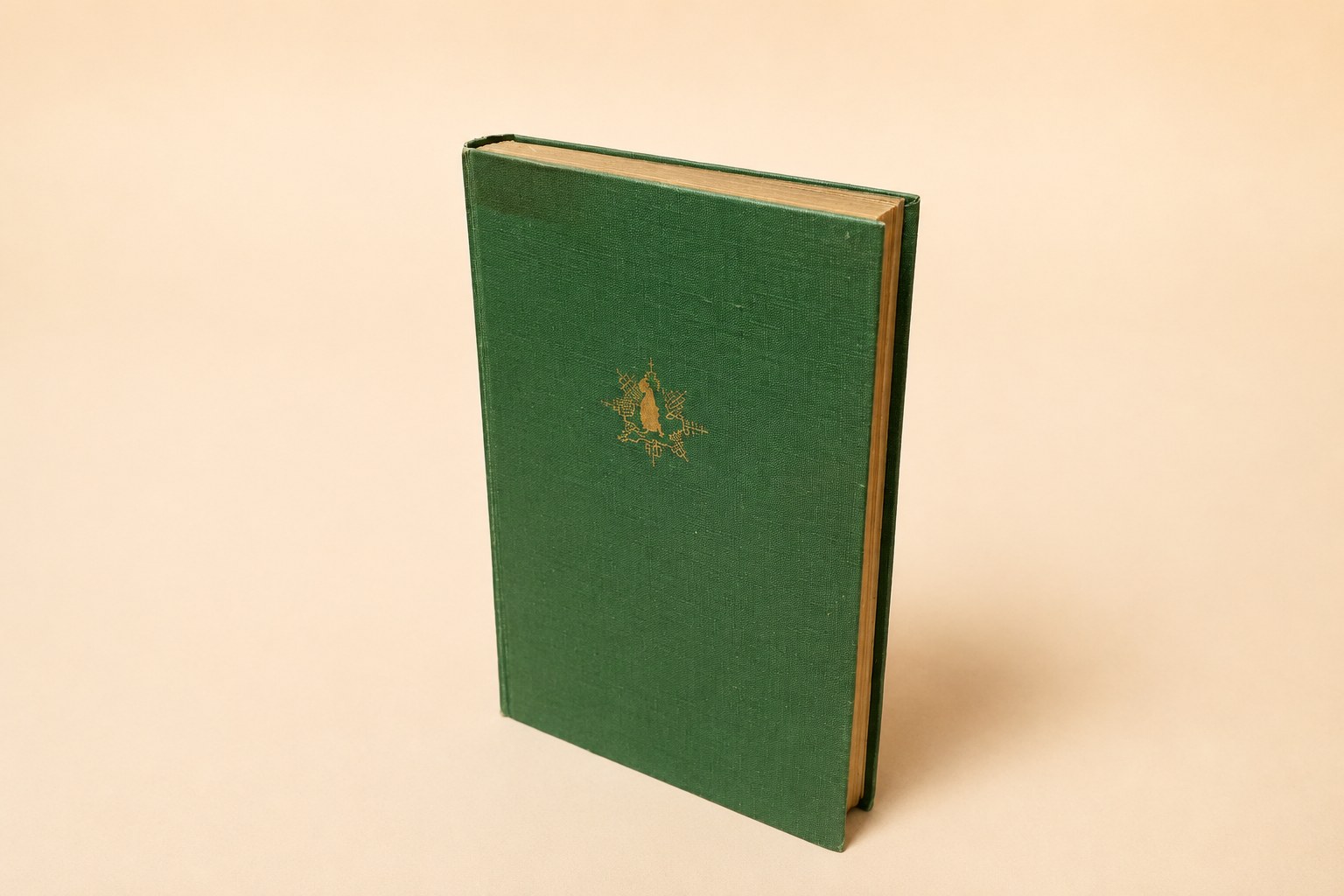
The trilogy's longest journey: Thames to Hadrian's Wall through Cotswold wool churches, Shakespeare country, the Marches, and the industrial North. The richest of the three volumes in architectural range (1950).
England East
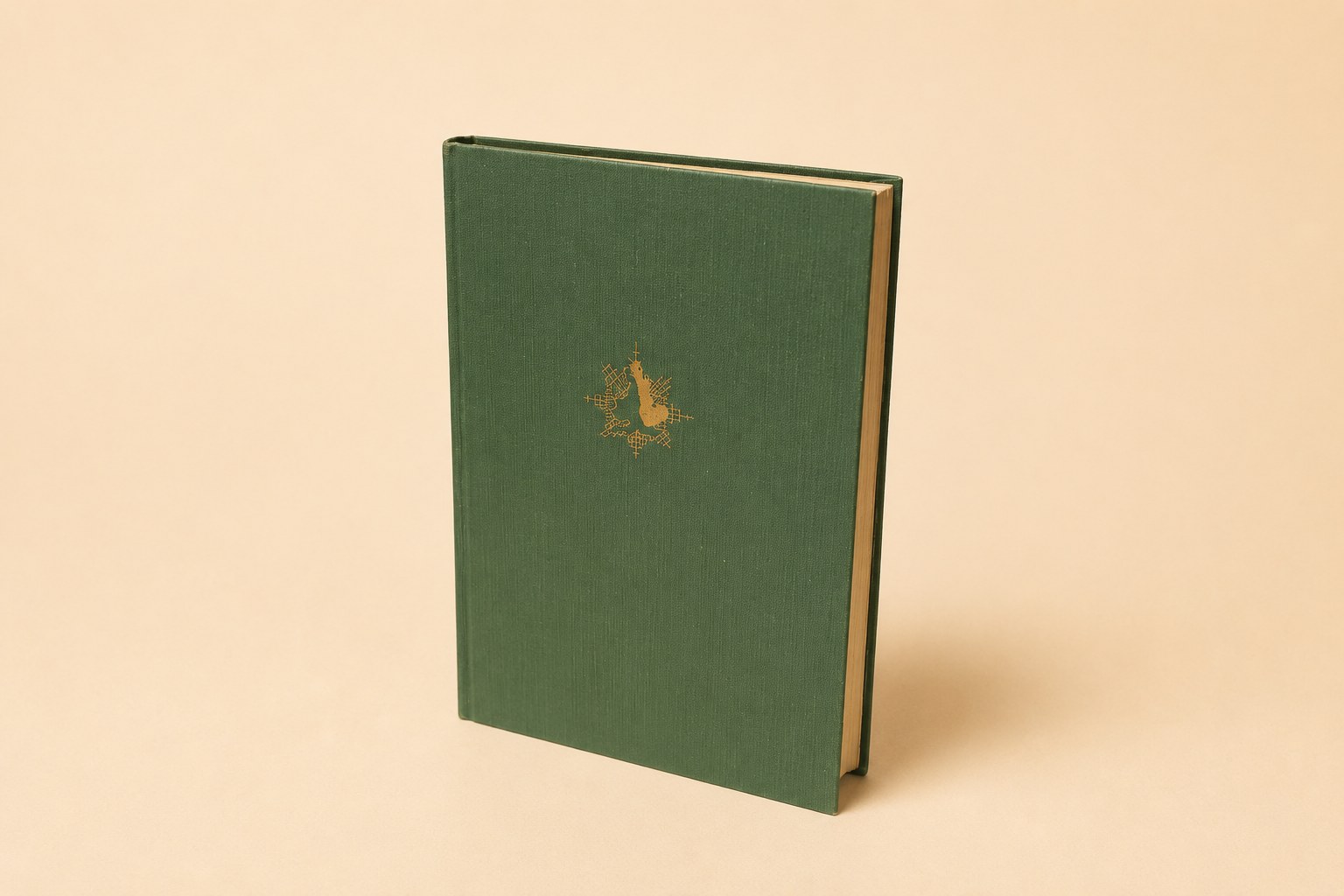
The farewell volume: Jones closes his life's work with a journey from the Thames to the Scottish border, saluting Durham coalminers alongside Northumbrian castles, under an epigraph about ashes and graves (1954).