Collections breed coincidences the way attics breed dust — quietly, constantly, and without anyone arranging it. This is the Meridian's first and favourite: three objects, bought separately, for separate reasons, in separate years, that all turn out to pass through a single ordinary date. Cut the collection at the year 1927 and three strangers step out of the shelf, blinking, having never met.
In July of that year, at Ensham L.C.C. School on Franciscan Road in Balham, a boy named Osmond Hollington was handed Nature's Arts and Crafts as a school prize for English. The London County Council label pasted neatly inside the cover preserves the whole transaction — school, subject, date — in the careful officialese of municipal pride. That December, in some other house entirely, a different hand opened a fresh, cheap-edition copy of The Flight of the Heron — printed only that February — and inscribed it Xmas 1927, a present passing between two people we will never identify. And far away in Bavaria, around that same year, the A.W. Faber works set running the production line for its "Castell" model 360 slide rule, celluloid-faced pearwood, made circa 1927–34 — one of which would, decades later, find its way to this very shelf.
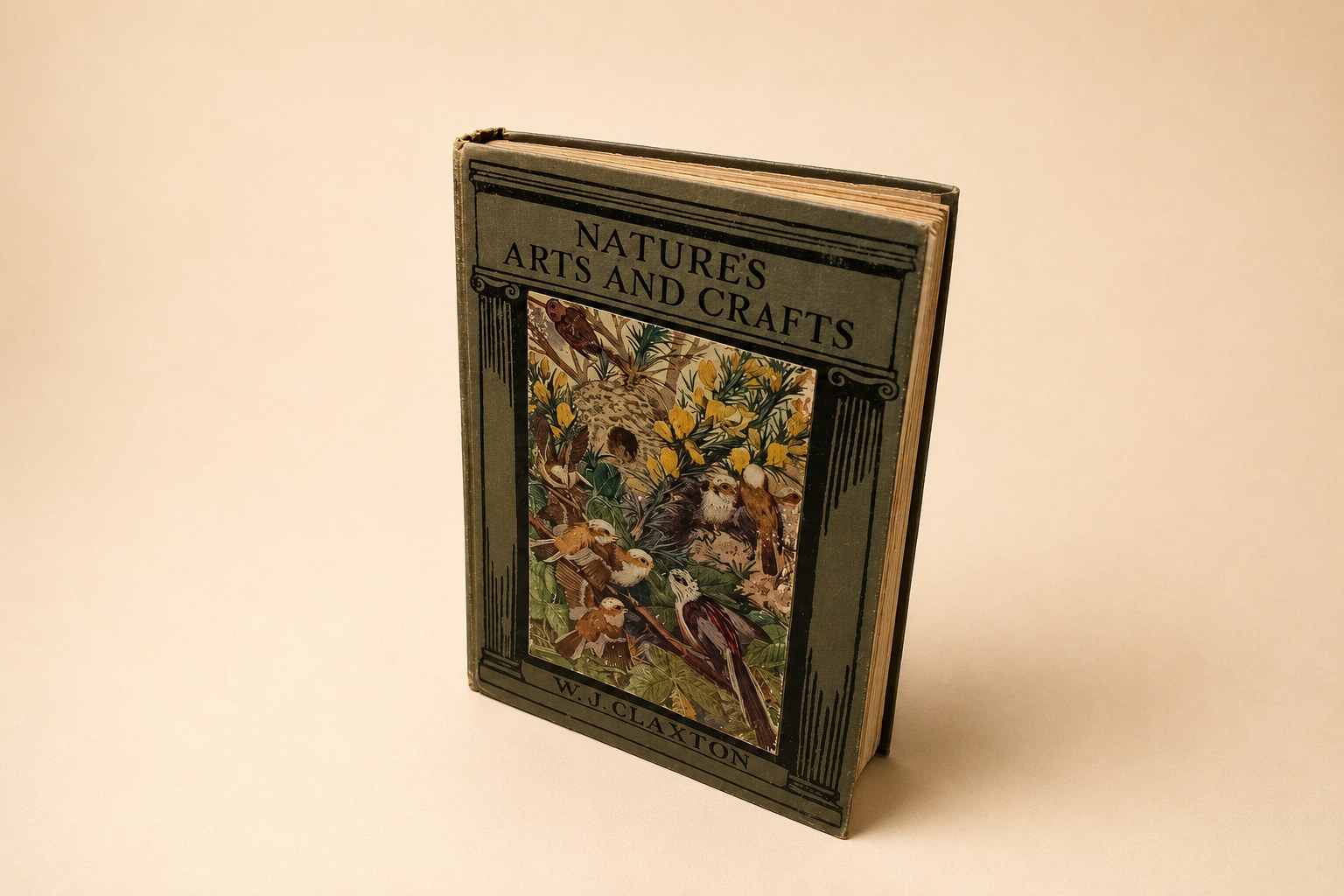
Spiders as architects, squirrels as bankers, bower birds as upholsterers: an Edwardian nature book for children, awarded as an LCC school prize to Osmond Hollington of Tooting for English, July 1937.
View object →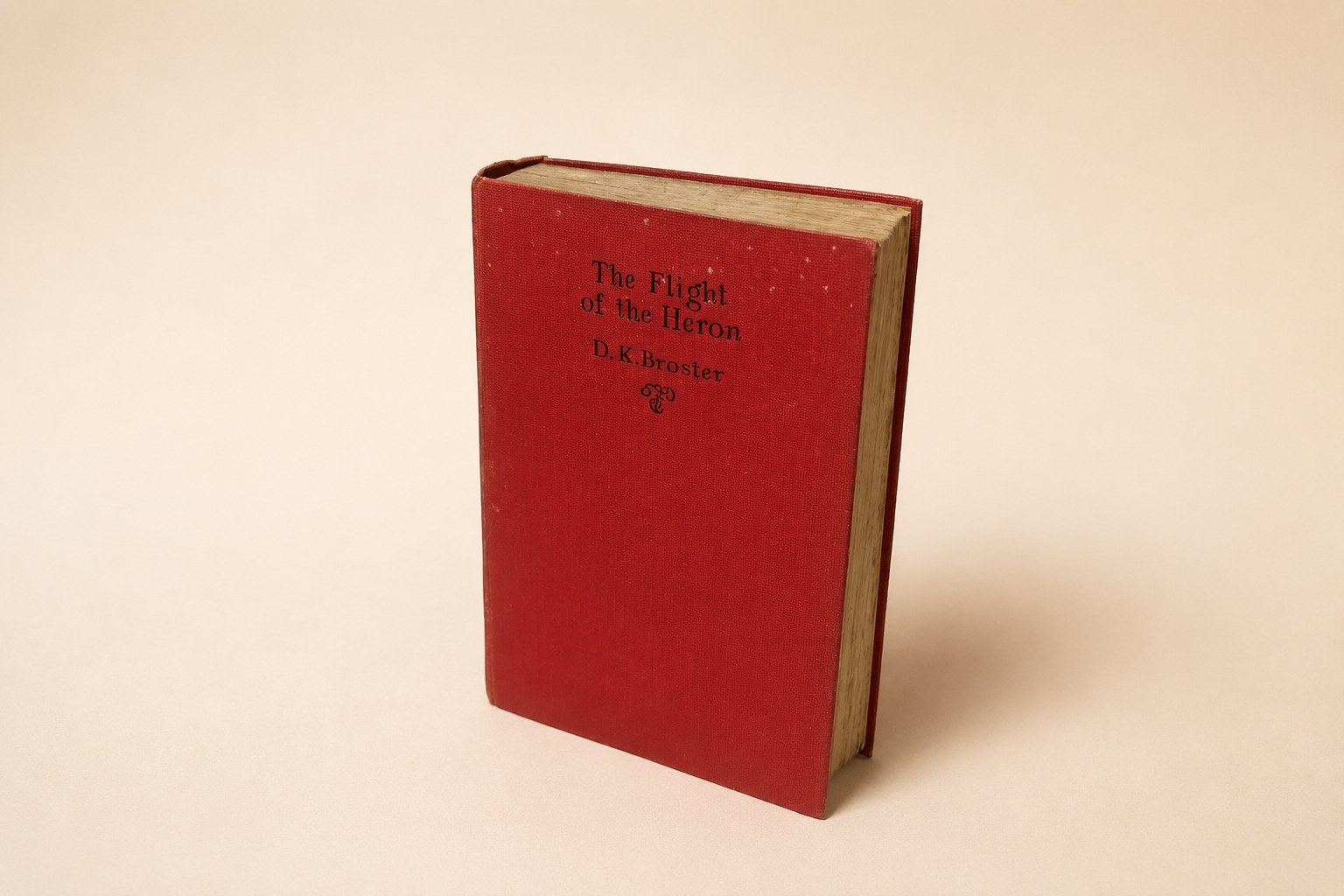
The defining Jacobite novel of the 20th century, built on a heron prophecy and an impossible friendship across enemy lines; this copy from the 1927 cheaper edition, inscribed by its first owner, Dickie Mackenzie.
View object →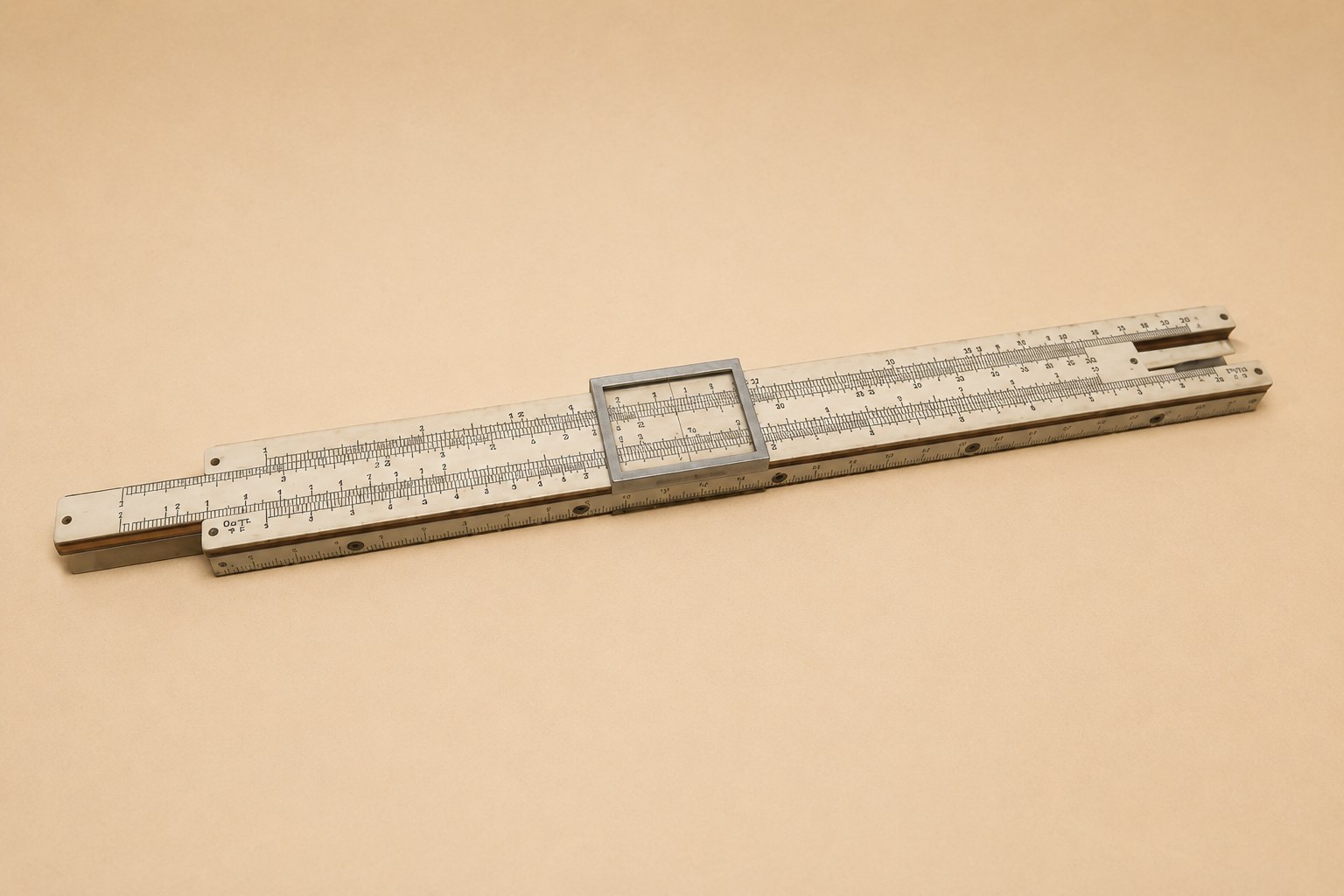
Before calculators, this is how the world did its maths. A celluloid-faced pearwood Mannheim slide rule by A.W. Faber "Castell", made in Bavaria c.1927–1934 for the English-speaking export market, with patented anti-warp bracing and its original glass cursor.
View object →Cut the shelf at any date and see who steps forward.
Nothing connects these three things except the naked accident of a year. And that — precisely that — is what makes them so quietly thrilling to set side by side. A schoolboy in south London being rewarded for his command of English. A reader somewhere unwrapping a novel of doomed Highland loyalty at Christmas. A German factory in Bavaria machining calculating instruments for the engineers of the whole industrial world. Three unrelated lives, three unrelated trades, all proceeding in parallel through one unremarkable year between the wars — none of them aware of the others, none of them dreaming that their small material traces would, a century on, end up sharing a room.
A collection is usually meant to be read along its deliberate threads: by category, by maker, by theme, by the careful logic of the person who built it. But it can also be read sideways, as an accidental census. Choose any year and ask who answers. Choose 1927 and three people raise their hands — summoned not by any plan but by a prize label, a Christmas inscription, and a patent-stamped pearwood rule.
And here is the best part: the census is not closed. Every future acquisition that carries a date has some small, patient chance of joining this gathering. The thread will only thicken. Somewhere out there is another object stamped, signed, or printed in 1927, drifting through the world's junk shops and auction lots, with no idea that a small society is already waiting for it. 1927 is in no hurry. It can afford to wait.